

By The Basilinna Team
November 6, 2026
Background
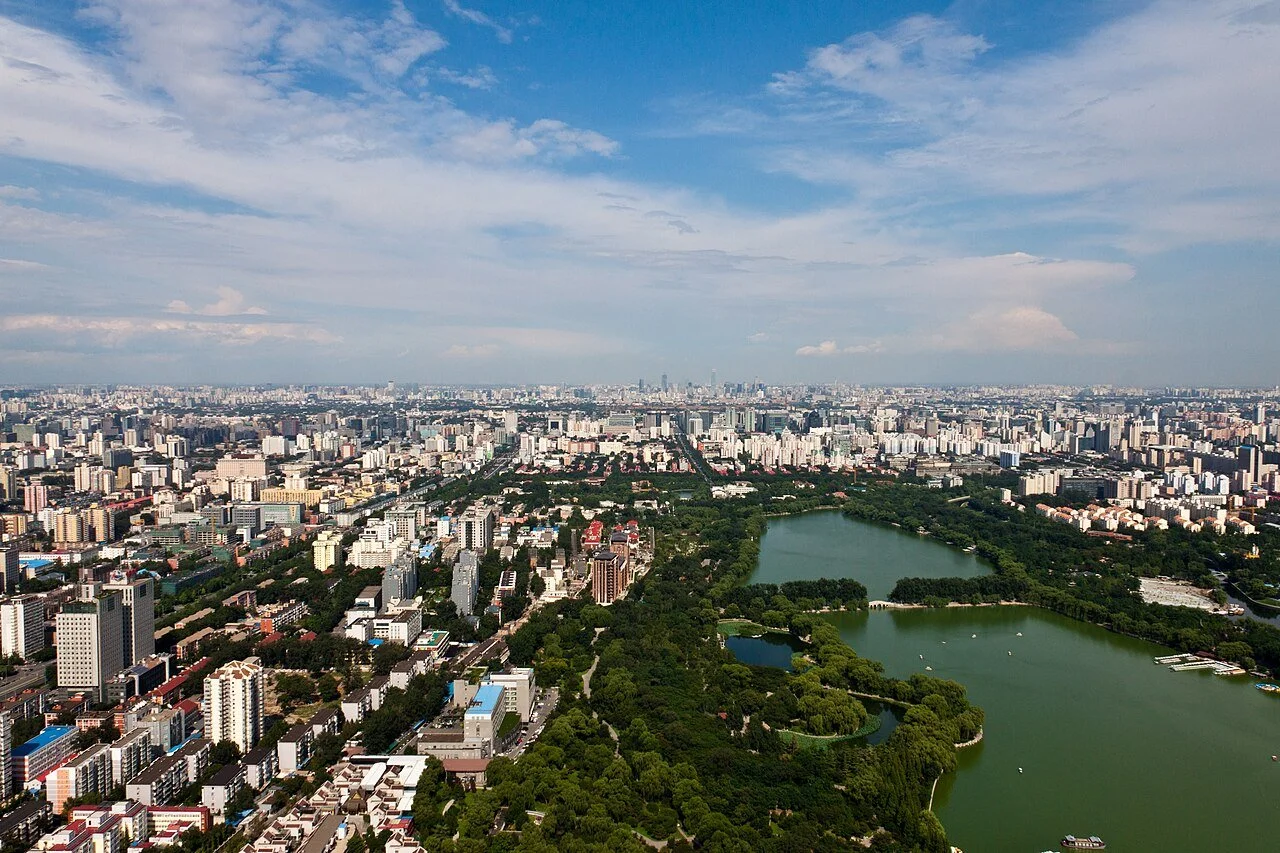
vView of the Haidian District in Beijing. (wikimedia/ahenobarbus)

Following the recently concluded Fifth Plenum of the 20th Central Committee of the Communist Party of China (CPC) and a series of political appointments, a group of younger leaders is coming into the spotlight. This report examines all 11 officials born in the 1970s who have attained full provincial–ministerial rank, excluding former NFRA Minister Li Yunze following his removal from Party posts.
Taken together, their career trajectories reveal emerging patterns in President Xi Jinping’s promotion of younger officials. Having grown up during China’s reform and opening-up, the rising members of this generation have both the potential for further advancement and the opportunity to shape Chinese policy in the coming years.
Key Promotion Patterns Among China’s Post-1970 Leaders
Early entry into senior leadership creates a longer promotion runway: Apart from A Dong’s relatively rapid ascent, few in this group are sudden rising stars. Many reached vice-provincial or vice-ministerial rank ahead of their peers, typically in their mid-to-late 40s, and served over five years at that level. Successive assignments broadened their experience while allowing sustained assessment of their performance, political reliability, and readiness for higher office.
Local governing experience anchors advancement: Provincial leadership experience is becoming a prerequisite rather than an advantage for officials advancing to top roles. All 11 have held local leadership positions, and ten have accumulated at least six years of service, underscoring the importance of sustained local experience in preparing officials for greater responsibility.
Regions associated with Xi’s career continue as prominent platforms: Six of the 11 have worked in Shaanxi, Fujian, Zhejiang, or Shanghai—regions closely associated with President Xi Jinping’s early career. Shanghai and Zhejiang, where both Xi and Premier Li Qiang served, stand out, with three officials having worked in each, underscoring their continued importance as springboards for advancement.
SOEs remain a major source of senior talent: Seven officials built their careers in industrial, energy, port, or engineering SOEs, while one came from a state-owned bank, together accounting for 73% of the sample. Their experience in industrial operations, investment, and risk management aligns with the leadership’s priorities of upgrading manufacturing, strengthening supply chains, and containing financial risks.
A new female leader may emerge: Guo Ningning’s appointment as Fujian governor makes her China’s first female governor born in the 1970s. She and Sichuan Governor Shi Xiaolin, born in 1969, are now the two youngest female governors, giving both a longer runway for further advancement. Guo may have stronger prospects, with Fujian offering a more significant springboard through its dynamic private economy, Taiwan-facing responsibilities, and close association with Xi’s career.
Four officials warrant particular attention: Liu Jie in Zhejiang, Liu Xiaotao in Jiangsu, Zhu Zhongming in Shanghai, and Guo Ningning in Fujian merit particular attention. These major coastal jurisdictions are critical to China’s economy and feature prominently in the careers of President Xi or Premier Li. Their economic and political significance makes their governorships important springboards to senior positions, making these officials’ relatively young ages especially consequential for their longer-term promotion prospects.
Table of Full Provincial–Ministerial Rank Officials Born in the 1970s
| Rank | Name | Date of Birth | Vice Provincial / Ministerial | Full Provincial / Ministerial | Current Position |
|---|---|---|---|---|---|
| 1 | A Dong 阿东 | Nov 1970 | Apr 2020 (50) | May 2023 (53) | First Secretary, Secretariat of the Communist Youth League Central Committee |
| 2 | Liu Jie 刘捷 | Jan 1970 | Nov 2016 (46) | Dec 2024 (54) | Governor of Zhejiang |
| 3 | Lu Dongliang 卢东亮 | Dec 1973 | May 2020 (47) | Jun 2025 (52) | Governor of Shanxi |
| 4 | Wei Tao 韦韬 | Apr 1970 | Feb 2021 (51) | Jul 2025 (55) | Governor of Guangxi |
| 5 | Liu Xiaotao 刘小涛 | Jul 1970 | Apr 2020 (50) | Sep 2025 (55) | Governor of Jiangsu |
| 6 | Zhang Chengzhong 张成中 | Oct 1970 | Dec 2021 (51) | Mar 2026 (56) | Minister of Emergency Management |
| 7 | Cheng Fubo 程福波 | Sep 1970 | Jul 2020 (50) | Jun 2026 (56) | Chairman, State-owned Assets Supervision and Administration Commission of the State Council (SASAC) |
| 8 | Zhu Zhongming 朱忠明 | Apr 1972 | Apr 2020 (48) | Aug 2026 (54) | Mayor of Shanghai |
| 9 | Zhuge Yujie 诸葛宇杰 | May 1971 | May 2017 (46) | Oct 2026 (55) | Governor of Qinghai |
| 10 | Guo Ningning 郭宁宁 | Jul 1970 | Nov 2018 (48) | Oct 2026 (56) | Governor of Fujian |
| 11 | Xie Weijiang 谢卫江 | Jan 1973 | Sep 2020 (47) | Oct 2026 (53) | Governor of Hunan |
Published by Basilinna Institute. All rights reserved.