

Coal Is Rising in China’s Clean Energy Transition
By Deborah Lehr and Ruihan Huang | As featured in The Diplomat
April 14, 2026
China is not moving from coal to renewables in a linear transition. Instead, it is attempting to expand both simultaneously.
China’s energy transition is entering a more complex phase than commonly assumed.
While the country is rapidly scaling up renewable energy – China now leads the world in both investment and deployment – coal production and coal power investment are also increasing.
China is not moving from coal to renewables in a linear transition. Instead, it is attempting to expand both simultaneously, balancing decarbonization goals with rising electricity demand and system reliability constraints.
China’s renewable expansion has reached unprecedented levels. In 2024, China’s clean energy investment exceeded $625 billion, nearly double the level in 2015. The country also achieved its 2030 wind and solar capacity target six years ahead of schedule. In that year alone, China installed around 360 gigawatts (GW) of wind and solar capacity – more than the rest of the world combined – bringing total installed capacity to 1.4 terawatts (TW), roughly one-third of the global total. Renewables have already surpassed coal in installed capacity and are expected to account for more than half of China’s total power capacity by 2030.
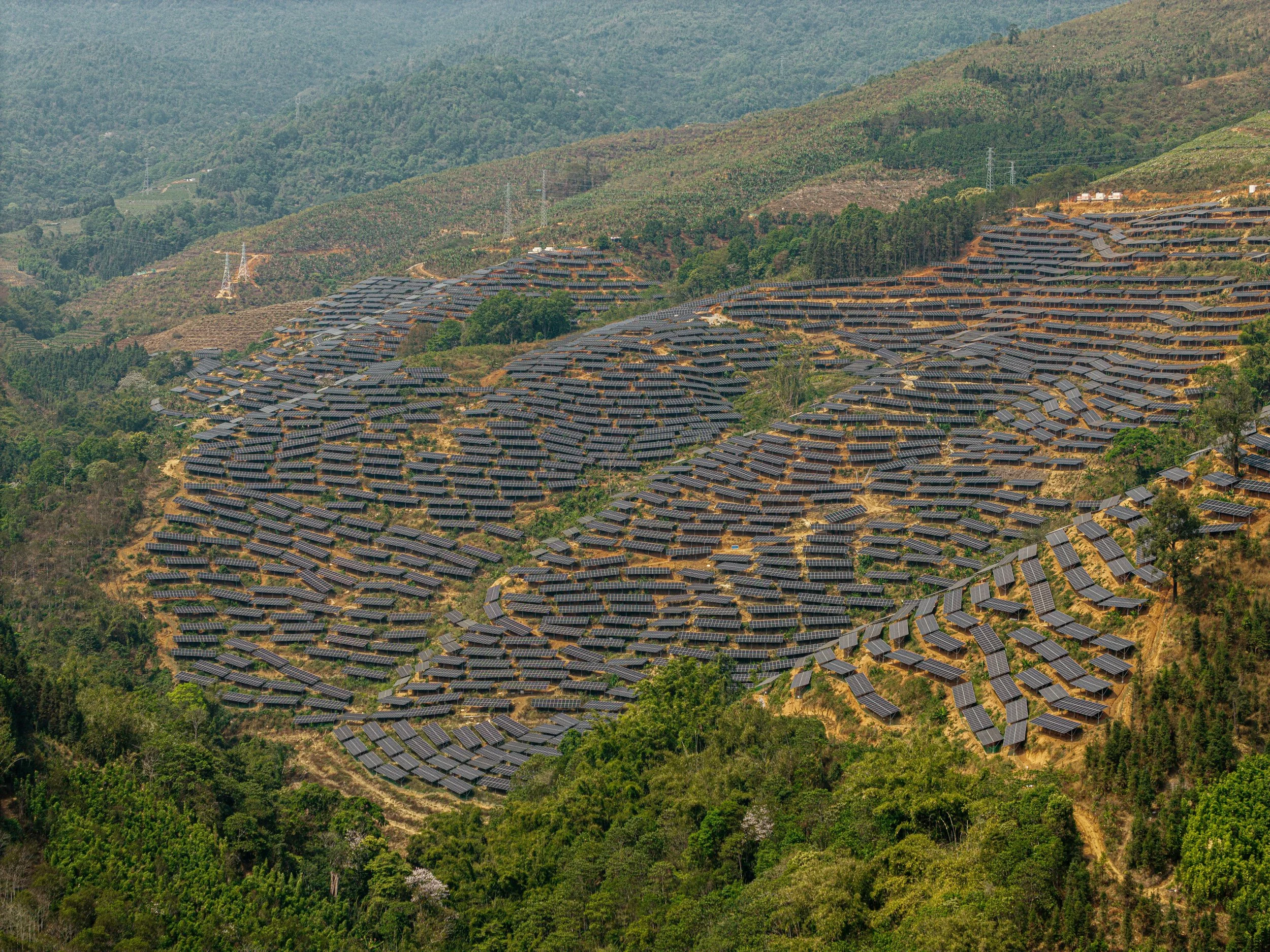
(Unsplash.com/Ghostinmirror)
Yet electricity demand is rising just as rapidly. Driven by the growth of artificial intelligence infrastructure, data centers, and broader electrification, China’s total power consumption exceeded 10.4 trillion kWh in 2025 – more than twice that of the U.S. and greater than the combined demand of the EU, Russia, India, and Japan. Demand has more than doubled since 2015 and is expected to continue growing at least 5 percent annually.
This combination – rapid renewable expansion alongside surging demand – has shifted the nature of China’s energy challenge. While renewables now account for around 84 percent of incremental electricity supply, their intermittent and weather-dependent nature makes it difficult to consistently meet peak demand. China’s power shortages in late 2021 and summer 2022, which affected around 60 percent of provinces for nearly two weeks due to extreme weather that reduced hydropower and wind output, exposed these vulnerabilities. In addition, geopolitical uncertainties – from the Russia-Ukraine conflict to the Iran-Israel-U.S. war – have heightened volatility in global energy markets, reinforcing a more cautious approach to the pace of the coal phase-down.
Against this backdrop, coal has re-emerged as a critical stabilizing force in China’s power system.
This helps explain the relatively cautious policy signals embedded in China’s 15th Five-Year Plan. While the plan reiterates long-term decarbonization commitments — including reducing carbon intensity by 17 percent and raising the share of non-fossil energy to 25 percent by 2030 — it still stops short of setting explicit timelines for coal or oil consumption to peak. This reflects a deliberate effort to preserve flexibility as Chinese policymakers balance energy transition goals with near-term electric system stability.
In practice, China’s coal production has rebounded significantly. After nearly a decade of supply-side reforms that kept output around 4 billion tonnes annually, coal production rose sharply following the 2022 power shortages and has continued to increase, reaching a record 4.85 billion tonnes in 2025.
Policy signals suggest this trend will likely continue. In March 2024, China’s National Energy Administration issued the “Guiding Opinions on Energy Work,” calling for the orderly release of new coal production capacity, the acceleration of construction for approved mining projects, and the early commissioning and ramp-up of coal mines currently under development. These measures are expected to further increase coal production capacity in the near term.
However, rising coal output does not necessarily signal a return to coal dominance.
Rather, coal’s role within China’s energy system is evolving.
As renewable capacity expands, the challenge is shifting from generating more electricity to managing variability and ensuring grid stability. In this context, coal is increasingly being repositioned from a traditional baseload power source to a flexible, dispatchable resource that can balance fluctuations in renewable generation.
This shift is partly shaped by structural characteristics of China’s energy system.
Unlike many advanced economies that rely more heavily on natural gas for balancing, China has a relatively limited domestic gas supply and higher import dependence. Battery storage is expanding rapidly, but remains insufficient in both scale and duration to fully offset renewable variability. As a result, coal power currently provides around 70 percent of peak capacity and nearly 80 percent of load regulation capacity in China, making the existing coal fleet the most immediate and reliable tool for managing variability in wind and solar output.
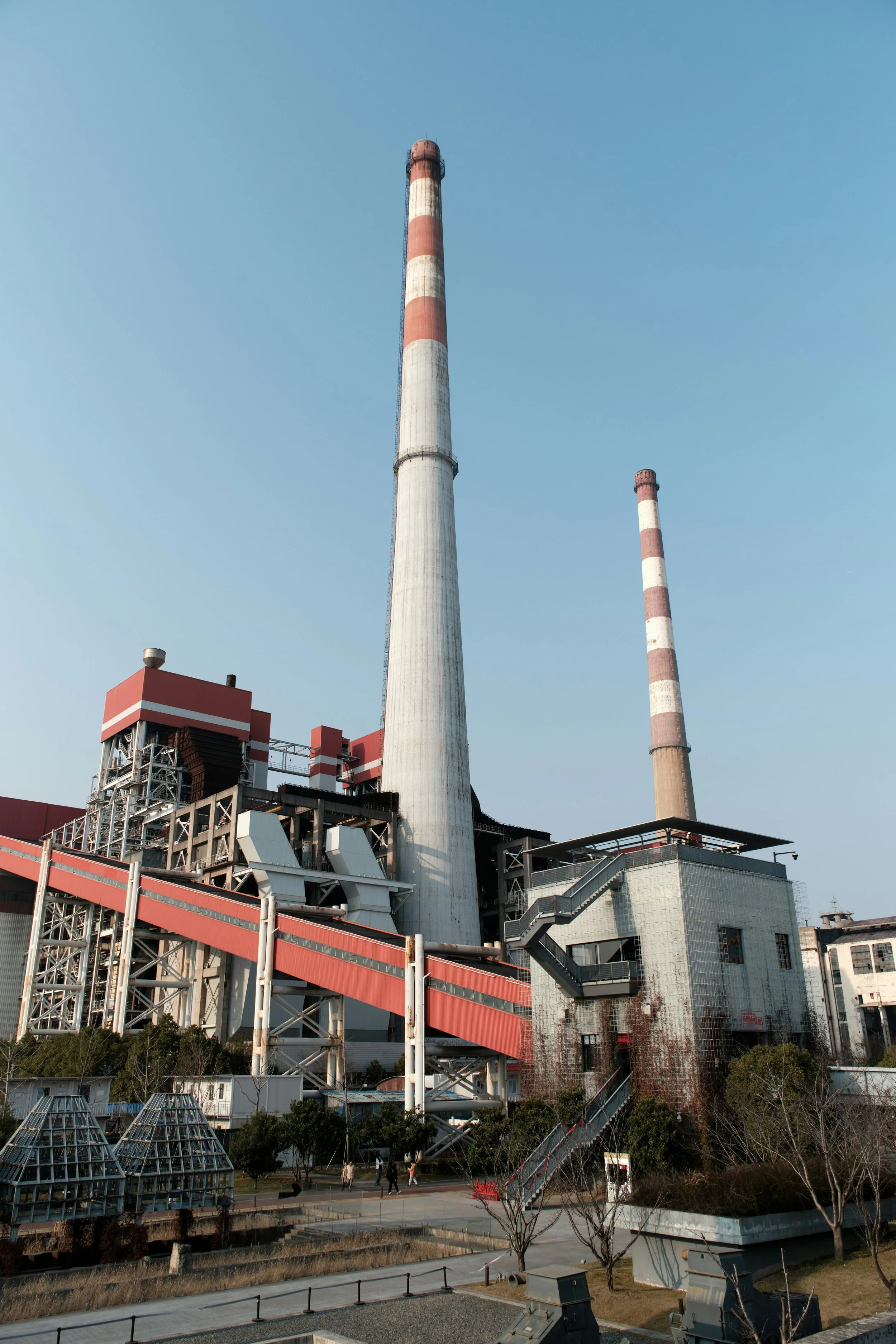
Yet the current pace of coal expansion raises new questions. Recent data suggest that coal capacity may be growing faster than actual system needs. In 2025, new and reactivated coal power project proposals surged to a record 161 GW, while newly commissioned capacity reached its highest level in a decade. At the same time, coal-fired generation declined by 1.9 percent, and clean energy expansion helped push China’s carbon emissions into decline for the first time.
Moreover, coal plants are already underutilized. In 2024, China’s average utilization rate of coal-fired power plants was only around 50 percent, indicating that generation could increase significantly without building additional capacity. This points to a potential gap between capacity expansion and actual system demand, raising the possibility that coal overcapacity could re-emerge.
Part of this pattern may reflect how energy security priorities are implemented at the local level. In practice, expanding coal capacity remains one of the more direct and readily deployable ways for local authorities to respond to central policy emphasis on energy security, as coal projects are relatively low-cost, faster to approve and construct, and technically mature.
While this dynamic may not change the overall direction of China’s energy transition, it could influence how efficiently it proceeds. As China continues to emphasize its 2030 carbon peaking and 2060 carbon neutrality targets, sustained near-term coal expansion may imply a greater need for adjustment later, such as lower utilization, earlier retirements, or stronger policy measures to manage emissions.
China’s energy transition, therefore, is not simply a shift away from coal, but an ongoing process of redefining how coal is used within the power system. Coal will remain an important pillar of China’s power infrastructure for the foreseeable future.
Coal will remain an important pillar of China’s power infrastructure for the foreseeable future.
Published by Basilinna Institute. Featured in The Diplomat.