

Mexico Now America’s Top Trading Partner as USMCA Review Looms
Strategic Considerations for Operating in the Next Phase of North America’s Economy
By Abel Hibert
February 5, 2026
Beyond Tariffs: The Hidden Costs of Trade
For Mexico, the tariff landscape has changed dramatically. The United States now applies:
25% tariffs on goods failing USMCA rules of origin, forcing supply chain restructuring
An additional 25% on autos lacking sufficient U.S. content, despite 40% of Mexico’s U.S. exports already containing U.S. components
10% duties on potash from Mexico and Canada outside USMCA preferences
50% tariffs on steel, aluminum, copper, and derivative products critical to machinery and construction
17.09% on tomatoes and 25% on heavy trucks and tractor trailers—industries in which Mexico dominates U.S. supply
Beyond tariffs, new nontariff barriers—like a 1% remittance tax, restrictions on cattle exports, flight cancellations from Felipe Ángeles Airport, and the termination of the Aeroméxico–Delta antitrust immunity—have added friction to cross border commerce.
For some firms, proving compliance can cost more than the tariff itself.
Less visible, but just as significant, are the tariffs many Mexican exporters still pay unnecessarily. Up to 20% of goods eligible for zero tariffs under USMCA enter the United States under the higher Most Favored Nation (MFN) rates due to recordkeeping burdens, complex origin rules, and audit risks. For some firms, proving compliance can cost more than the tariff itself. The result is a silent, self-inflicted tariff that undermines competitiveness and distorts supply chain planning.
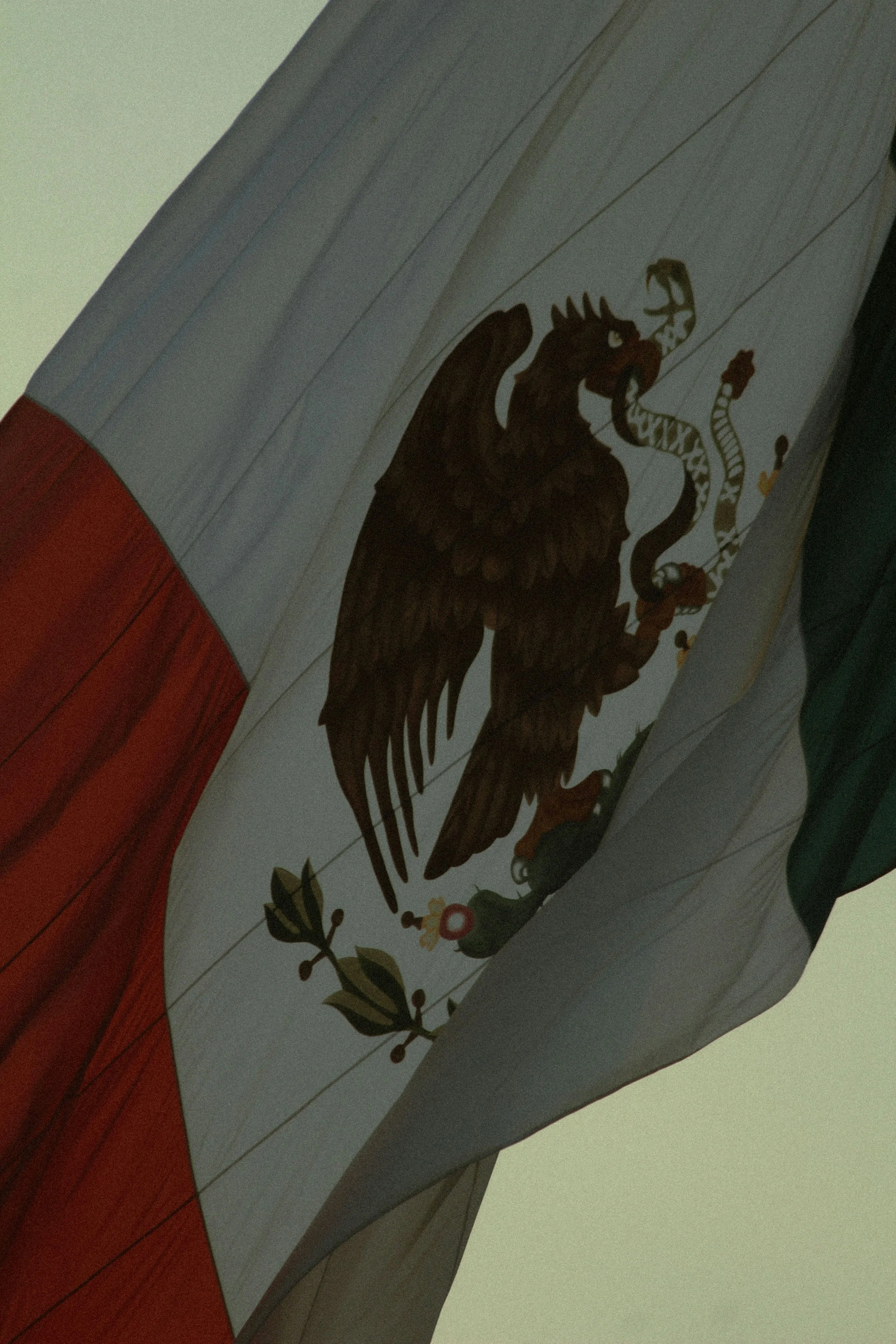
The flag of Mexico. (Unsplash/AcMon)
Mexico Surpasses Canada and China
Despite the turbulence, Mexico became the United States’ largest trading partner in 2025. As of August 2025:
U.S. exports to Mexico accounted for 15.64% of total exports, slightly ahead of Canada (15.59%) and far above China (5.08%).
Mexico’s share of total U.S. imports reached 15.0%, compared with Canada’s 10.9% and China’s 9.2%.
Since 2016, Mexico gained 1.83% in U.S. import share, while China lost 11.1%.
Mexico's proximity, manufacturing depth, and integrated value chains have cemented its lead position in North American trade.
Mexico’s effective tariff rate of 10.6%—lower than China’s 27.9% or Canada’s 13.1%—helps explain its resilience. Its proximity, manufacturing depth, and integrated value chains have cemented its lead position in North American trade.
Deepening Interdependence
Trade between the two countries is more coproduction than exchange. Auto parts and components may cross the border up to eight times before final assembly. Mexico is now the top destination for U.S. exports of cereals, energy products, machinery, electronics, and medical devices.
Regional integration remains the backbone of both economies.
The U.S., in turn, accounts for over 83% of Mexico’s exports and nearly 40% of its foreign direct investment. Regional integration, built since NAFTA’s launch in 1994, remains the backbone of both economies.

A group of ships on the water in Ensenada, B.C., Mexico. (Unsplash / Oscar De La Lanza)
2026 USMCA Review
With the statutory USMCA joint review approaching on July 1, 2026, companies across North America face heightened uncertainty.
Industry and legal experts have flagged key friction points—energy sector commitments, regulatory independence, and judicial uncertainty following Mexico’s 2025 constitutional reforms.
The USTR has accelerated its assessment of the agreement, holding public hearings to gather evidence on trade barriers and compliance. Industry and legal experts have flagged key friction points—energy sector commitments, regulatory independence, and judicial uncertainty following Mexico’s 2025 constitutional reforms. The USTR’s findings will shape the renegotiation agenda.
Preparing for the Next Phase
For firms operating within the USMCA framework, the next few months will be decisive. Companies can strengthen their position by:
Tightening Rules of Origin compliance to avoid unnecessary tariffs.
Mapping and documenting nontariff barriers.
Investing in internal compliance systems to adjust to evolving standards.
Engaging in or building North American coalitions to ensure unified private sector advocacy.
A Test for Integration
The U.S.–Mexico economic partnership remains mutually indispensable. Yet while the two economies are more intertwined than ever, inefficiencies in customs compliance and escalating tariffs highlight how much potential remains untapped. As the 2026 review nears, Mexico’s ascent as America’s top trading partner may prove both the strongest argument for—and the biggest test of—the USMCA’s long-term endurance.
