

Returning to Huzhou, China's Living Laboratory for Green Finance
By Gracie Sun
May 15, 2025
Huzhou always leaves me quietly inspired.
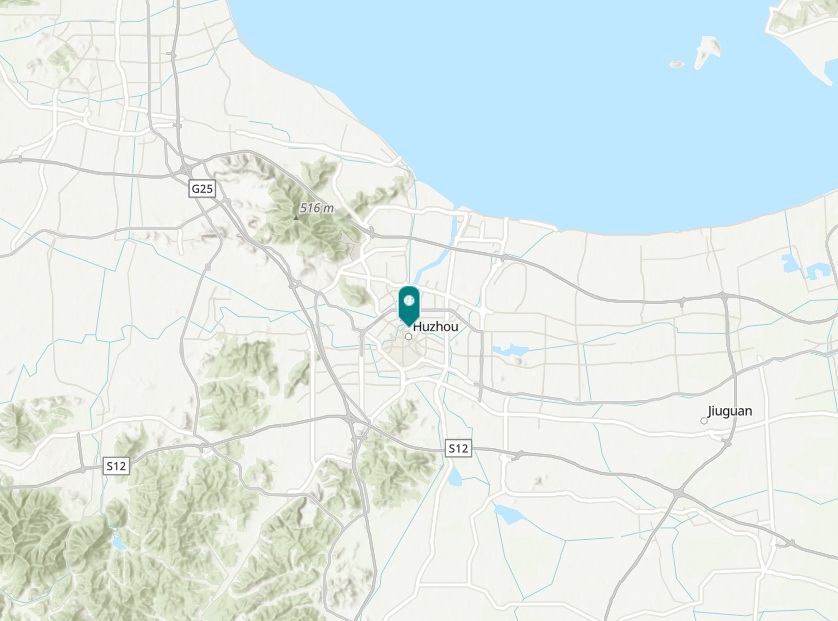
I've now visited six times, and each return reveals something new not only in policy or innovation but in the air, the water, and the spirit of the city itself. Nestled beside the tranquil Taihu Lake and just an hour's high-speed train ride from Shanghai, Huzhou has become one of the most dynamic places in China, where environmental vision meets real-world use.
from concept to action
Huzhou has become one of the most dynamic places in China, where environmental vision meets real-world use.
More than just the beauty of the wetlands or the historic charm of Huzhou's calligraphy tradition, what makes the city special is its commitment to redefining what economic growth looks like in the 21st century. This is, after all, where President Xi Jinping first introduced the now-famous Two Mountains Theory nearly two decades ago, asserting that clear waters and lush mountains are invaluable assets. And in Huzhou, that principle is being turned into measurable progress.
Huzhou has taken its role seriously since it was named one of China's first Green Finance Reform and Innovation Pilot Zones in 2017.

(Flickr, Roberto Franceschini)
I've watched the city evolve from offering early pilots in green lending to cultivating a sophisticated ecosystem that integrates sustainability into nearly every aspect of financial decision-making. It's evident in policies like the Huzhou Green Finance Promotion Regulation, China's first of its kind at the prefecture level, which laid the groundwork for binding standards and targeted incentives.
Every time I visit Huzhou, I see new sustainability developments. The effort represents more than just policy on paper. The Carbon Account System now tracks emissions across 20,000 enterprises, many of which are small and medium-sized businesses. I was particularly struck by how this digital infrastructure supports practical financing tools, such as Low-Carbon Transition Loans, which automatically adjust interest rates based on carbon performance. It's not just innovative; it's working. Borrowing costs are lower, and the default rates remain negligible.
What stood out this March was how seamlessly biodiversity has been woven into Huzhou's financial framework.

Flickr, ╬ಠ益ಠ
Huzhou is embedding ecological indicators into lending decisions from wetlands restoration to canal conservation. These moves are deeply data-driven and backed by regulations and local political will.
I was pleased to bring Deborah Lehr, Basilinna Chair and CEO, and Vice Chair and Executive Director of the Paulson Institute, to see these innovations firsthand. There's something about walking beside the bamboo forests of Anji or visiting a city office where carbon credits are traded in real-time that concretizes sustainable finance better than any conference or white paper ever could.
The Anji Initiative, which turns vast bamboo forests into tradable carbon assets, has become a benchmark in just transition financing. In fact, it has already facilitated hundreds of thousands of tons of carbon credit transactions and generated millions in local revenues. These successes demonstrate that it is possible to modernize a local economy while preserving—and profiting from—nature.
A playbook for emerging economies
Huzhou offers not just a template for China but a playbook for other emerging economies struggling to balance growth with sustainability.

虎 曼
What Huzhou offers is not just a template for China but a playbook for other emerging economies struggling to balance growth with sustainability. It's where regulation is precise, technology is practical, and incentives are aligned with long-term planetary goals. Each time I return, the skies are a little clearer, the lakes a little cleaner, and my belief in applied green finance is a little deeper. Cities like Huzhou are not just possible; they're replicable.
Gracie Sun is Basilinna Chair of Asia Pacific at Basilinna. She also serves as Managing Director of the Green Finance Center and Senior Advisor of the Paulson Institute.
