Trump-Xi Meeting: Strategic Competition Doesn’t Preclude Selective Cooperation
By the Basilinna Team
May 15, 2026
Your talking points
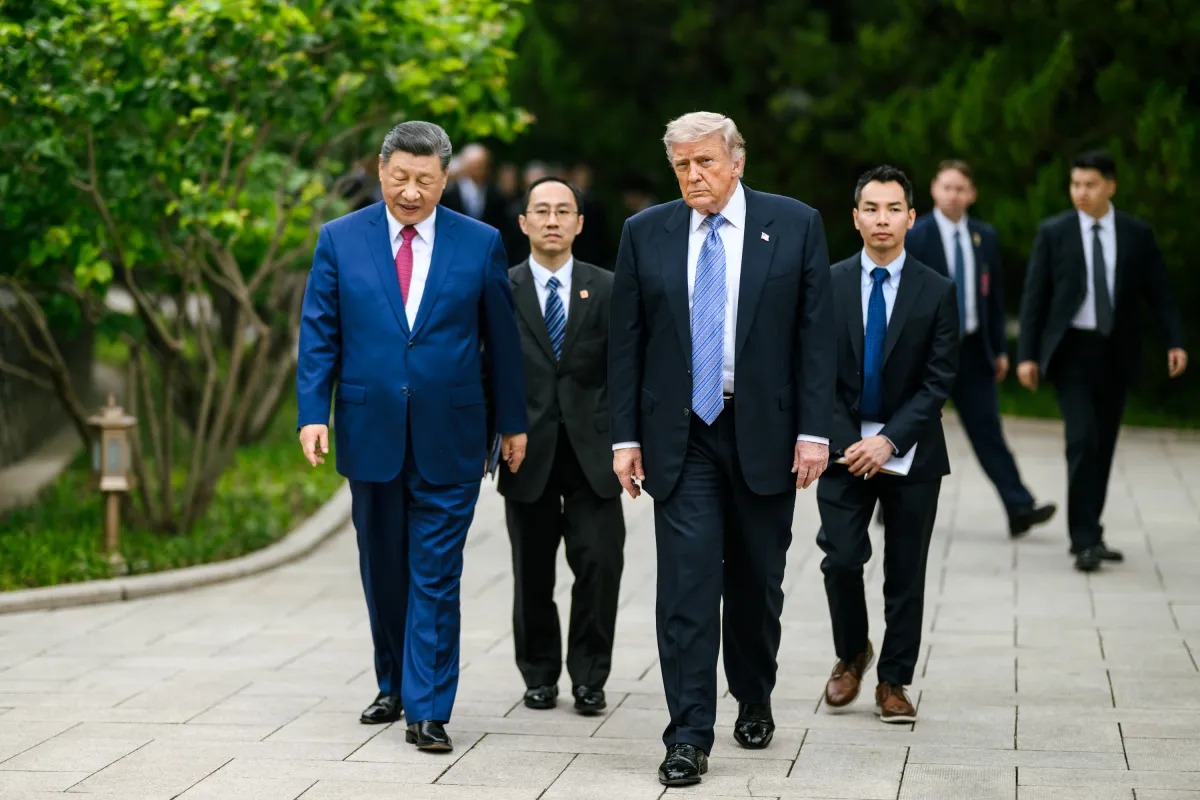
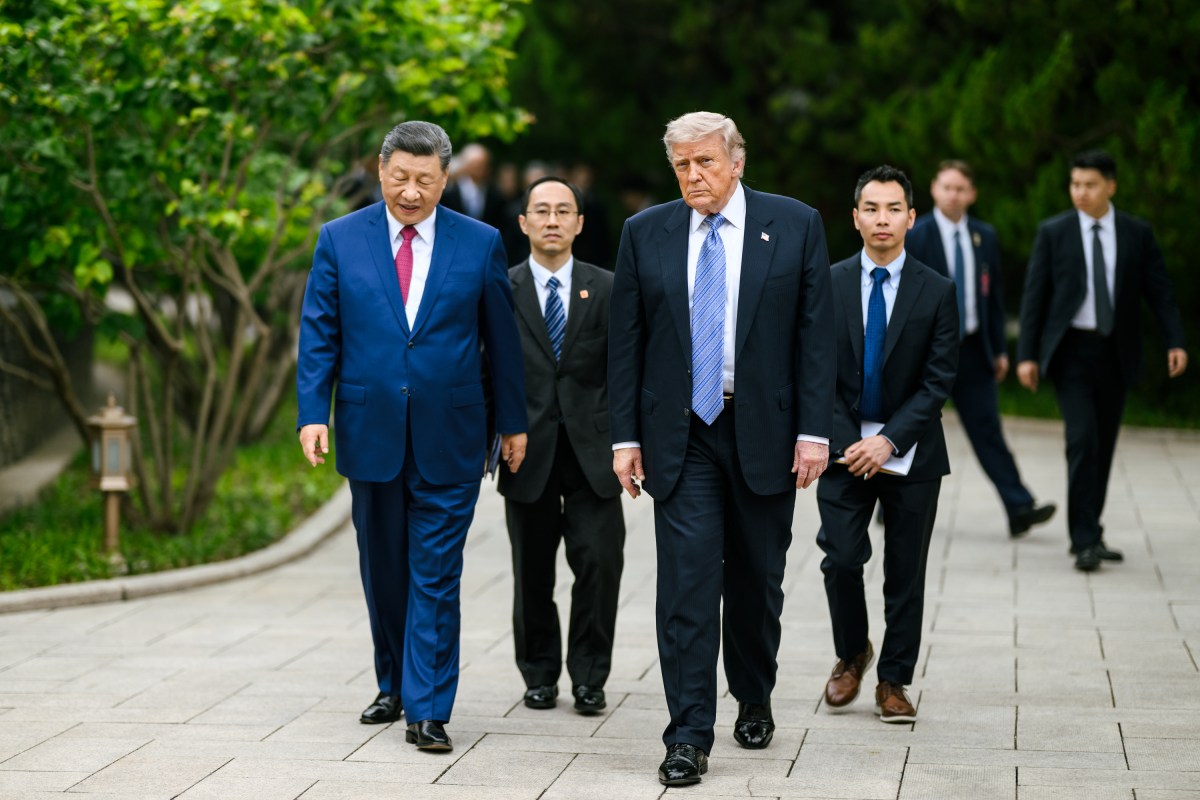
President Trump and President Xi signaled a mutual interest in stabilizing the U.S.-China relationship through continued high-level engagement, economic ties, and military communication, even as tensions continue over Taiwan, technology, Iran, and national security.
While no major economic agreements were announced, discussions appeared to advance around the “five Bs”: Boeing, beef, beans, and the two new trade and investment boards.
Technology remains both a central arena of competition and a potential area for cooperation. The inclusion of senior AI and semiconductor executives, along with discussions on AI governance and guardrails, suggests both governments want to avoid uncontrolled technological escalation.
The visit also underscored growing perception of China’s geopolitical significance, particularly on Iran and Middle East stability, reinforcing a view that Beijing’s cooperation may be increasingly required to manage global crises.
Beyond the Points
Competition with Selective Cooperation
President Trump’s visit to China was significant less for specific deliverables than for what it revealed about the evolving framework of U.S.-China relations under Trump and Xi. Despite deep structural tensions, both leaders signaled that strategic competition can coexist with selective cooperation and active management of rivalry.
The exchanges were notably cordial. Trump repeatedly emphasized the importance of maintaining strong ties between the world’s two largest economies and invited Xi for a State Visit to Washington in September. Xi framed the relationship around “constructive strategic stability,” signaling Beijing’s preference for predictability and guardrails rather than continued escalation. China, meanwhile, delivered a level of ceremony exceeding previous U.S. presidential visits.
Chinese commentary framed the visit around China’s “three Ts”—Taiwan, tariffs, and technology—and America’s “five Bs”—Boeing, beef, soybeans, and the two trade and investment boards. The contrast captured the broader dynamic: intensifying strategic competition alongside efforts to preserve economic ties where possible.
Geopolitical Backdrop – Taiwan, Iran & Russia
On Taiwan, Xi reiterated Beijing’s longstanding position that reunification remains a core national objective and warned against support for Taiwanese independence. Secretary Rubio reaffirmed that U.S. policy remains unchanged. Yet Trump noted: “The last thing we need is to have a war that is 9,500 miles away” and [Trump] “is not looking to have somebody go independent.”
Iran emerged as another major focus. China indicated it “would like to be of help” in resolving the crisis, while Trump claimed Xi supported keeping the Strait of Hormuz open and would not provide military assistance to Iran. Whether Beijing is willing or able to play a meaningful role remains uncertain.
The broader regional context also mattered. The visit followed Chinese engagement with Saudi Arabia, the UAE, Iran, and Pakistan on regional diplomacy and stability. Putin’s upcoming visit to Beijing reinforces China’s increasingly central role across overlapping diplomatic tracks involving the U.S. Beijing appears to be positioning itself not only as a strategic competitor to Washington, but also as an interlocutor in managing regional crises.
What the delegation indicates
The composition of President Trump’s delegation was also important. The inclusion of leading American executives from the AI, semiconductor, and technology sectors underscored the paradox now defining the U.S.-China relationship: technology is simultaneously the central arena of strategic competition and an area where both governments still see value in engagement, rule-setting, and managed interdependence.
The official delegation reflected the same balancing act. Treasury Secretary Scott Bessent—now emerging as the administration’s lead negotiator on China trade and economic policy—traveled alongside Secretary of State Marco Rubio and Secretary of Defense Pete Hegseth.
Hegseth’s participation was especially notable. It marked the first time since Nixon’s 1972 trip that a U.S. defense secretary accompanied a president to China. Amid heightened tensions over Taiwan, military modernization, and regional deterrence, his inclusion suggests both governments increasingly view military-to-military communication as essential to stability.
Stability is the word
Taken together, the visit suggests that both Trump and Xi have strong domestic and strategic reasons for seeking greater stability in the relationship. Neither side appears interested in uncontrolled escalation. Instead, both are attempting to build a framework where competition can be managed, economic ties selectively preserved, and direct confrontation avoided. The Chinese noted this as one of the major deliverables of the visit.
The visit produced no major trade breakthroughs, but several negotiations appear to be advancing. Trump argued his trade policies are reducing the deficit with China, while Xi reiterated support for further opening China’s market to U.S. goods and services.
China committed to additional purchases of politically important American exports, including soybeans and Boeing aircraft. U.S. Trade Representative Jamieson Greer indicated agricultural purchases could reach “double-digit billion” figures, while Secretary Bessent indicated that tariffs could be reduced on over $30 billion worth of goods. Success, however, will be in the details and the follow-through.
Discussions also included increased Chinese purchases of U.S. oil and LNG as Beijing seeks to diversify energy supplies. Citigroup is reportedly expected to receive approval for a wholly owned securities operation, while discussions reportedly involve potential agreements connected to Nvidia and 10 Chinese companies.
More important than any individual deal may be the proposed trade and investment boards designed to institutionalize economic management between the two countries. These mechanisms appear intended not only to promote American exports and manage tensions over Chinese exports, but also to explore how the two sides can invest more “safely” in one another’s economies amid rising political scrutiny and national security concerns. We expect to see progress on the creation of these boards in follow-up negotiations.
For Chinese firms, overseas investment is increasingly tied not just to market access, but to supply-chain resilience, tariff mitigation, and proximity to end markets. In this sense, Chinese outbound investment may align with elements of the Trump administration’s interest in attracting additional manufacturing and industrial capacity to the United States.
China also included several of its national champion companies in the visit delegation, including ByteDance, Haier, Xiaomi, Fuyao Glass, Wanxiang Group, and Xiaomi.
Ultimately, the visit points to a more structured form of coexistence. Neither side is abandoning its long-term ambitions or core national interests. But both increasingly recognize that the economic, military, and geopolitical costs of uncontrolled confrontation are too high. The emerging objective is not partnership, but managed competition with selective cooperation and stronger guardrails against escalation.
Published by Basilinna Institute. All rights reserved.