Biodiversity Is a Language We Are Only Beginning to Understand
What if we are not only losing life forms, but also languages, relationships, intelligence, and systems of knowledge that humanity has barely begun to understand?
By Deborah Lehr
May 22, 2026
As we mark International Day for Biological Diversity, we often speak about biodiversity in the language of loss: disappearing species, degraded ecosystems, shrinking forests, warming oceans.
These statistics are staggering and important. Scientists estimate that we could lose up to half of the world’s species by mid-century if current trends continue. But increasingly, science is revealing that what we are losing may be even more profound than we once understood.
What if we are not only losing life forms, but also languages, relationships, intelligence, and systems of knowledge that humanity has barely begun to understand?
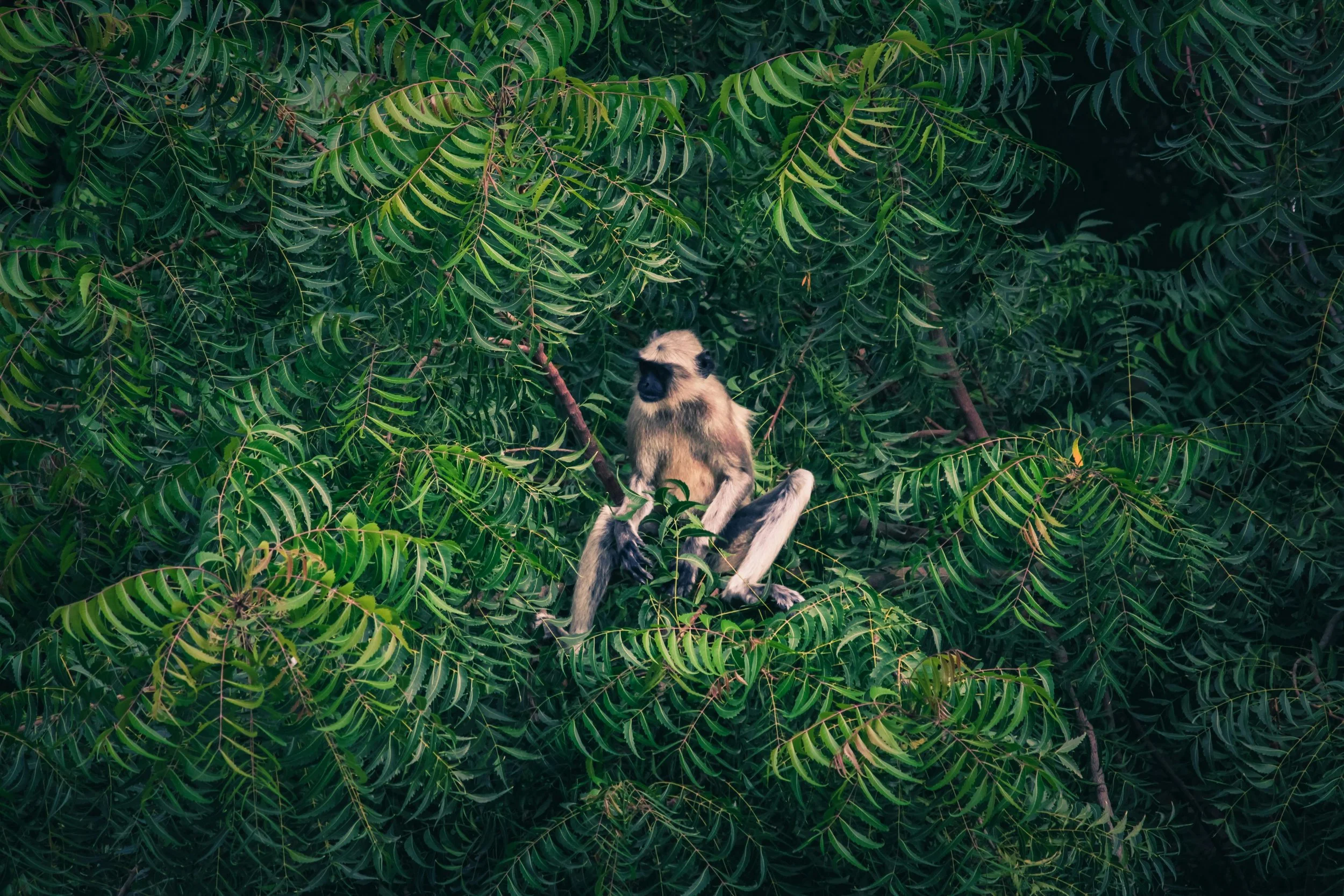
A langur monkey sitting peacefully among lush green leaves. (Pexels/Kalpesh Patel)
I was recently speaking with David Gruber, founder of Project CETI and a National Geographic Explorer, whose team is using artificial intelligence to better understand how sperm whales communicate. Remarkably, researchers have discovered that sperm whales possess a sophisticated communication system — one that appears to include structures analogous to an alphabet, complete with patterns that resemble vowels and syntax. Scientists hope that within the next several years, they may be able to begin meaningfully translating elements of whale communication.
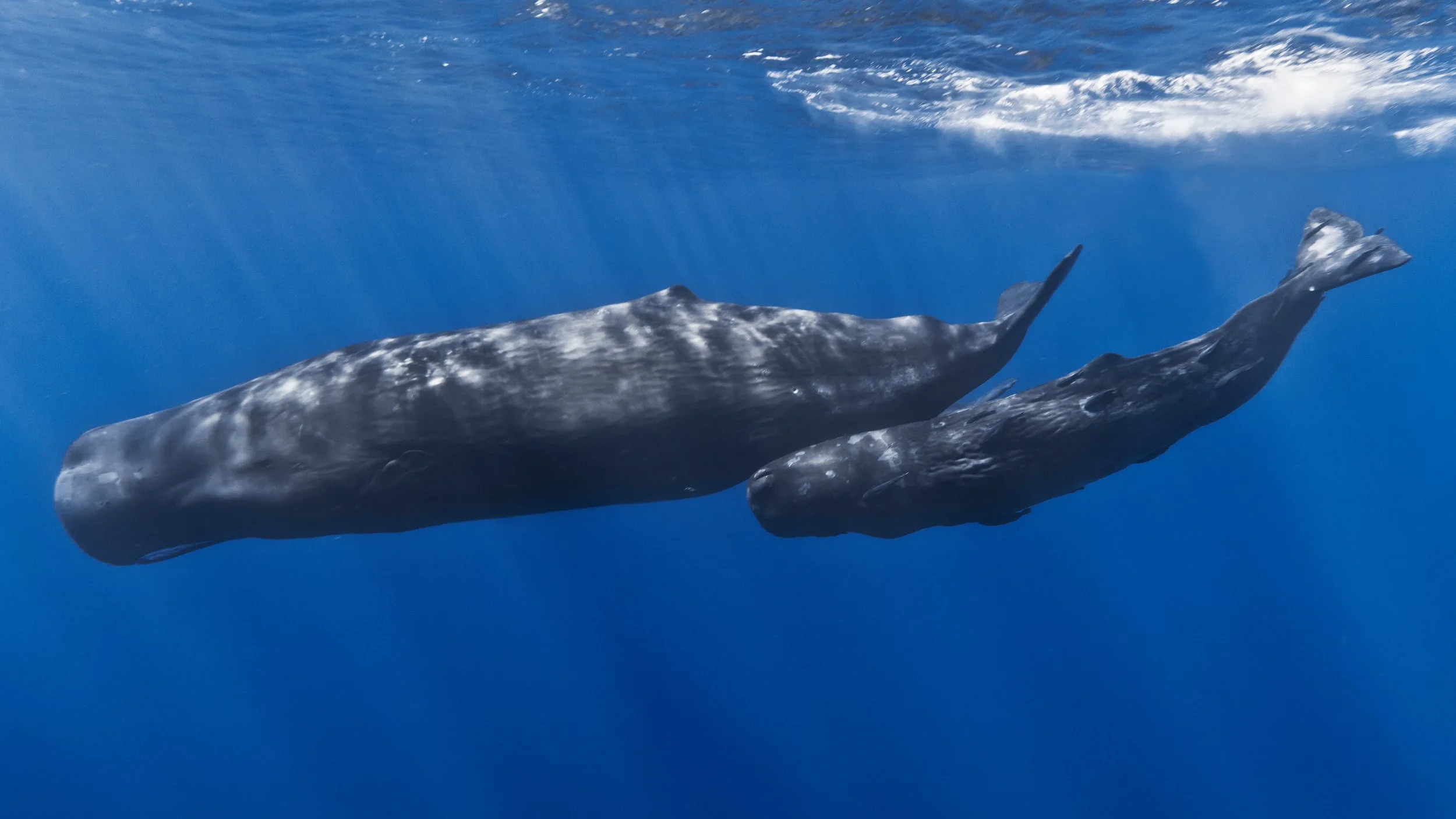
A mother sperm whale and her calf off the coast of Mauritius. The calf has remoras attached to its body. (Flickr/Gabriel Barathieu)
At nearly the same time, the groundbreaking work of Suzanne Simard, Professor of Forest Ecology at the University of British Columbia and best known for her research on forest ecology and plant intelligence, has demonstrated that forests are not collections of isolated trees, but deeply interconnected systems of communication. Her research on “mother trees” suggests that trees can recognize and support their own offspring, while exchanging nutrients and signals across vast underground fungal networks.
These examples, from the ocean to the forest, point to a fact we can no longer ignore: nature is not passive scenery. The more we learn about nature, the more we discover forms of intelligence, communication, adaptation, and interdependence that humanity is only beginning to comprehend.
It raises an unsettling question: as biodiversity disappears at a staggering pace, how many of these languages, relationships, and systems of knowledge are being lost before we have even understood that they existed?
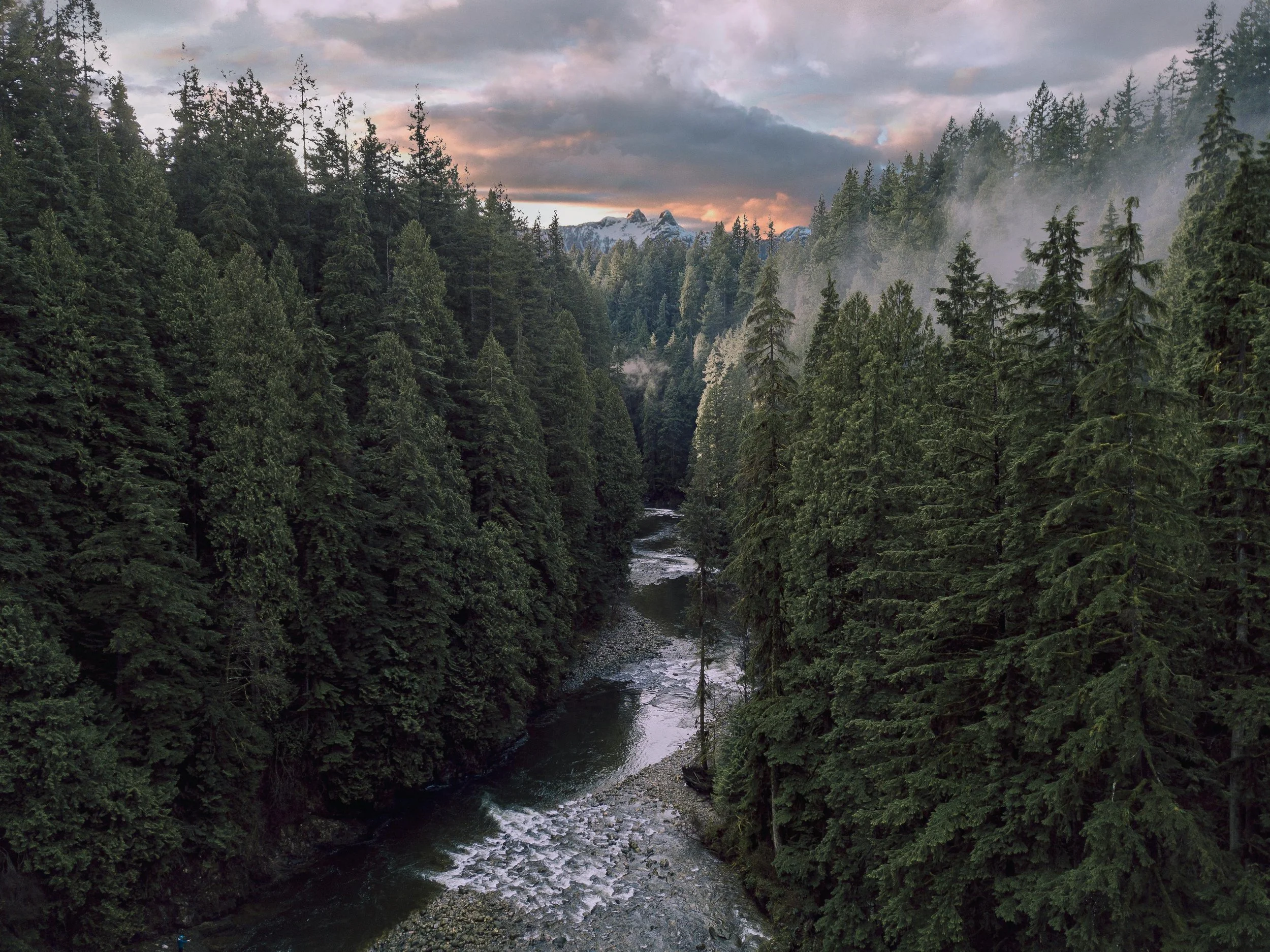
The Capilano River flowing a coniferous forest in Vancouver, BC, Canada. (Pexels/Scott Gudahl)
For too long, biodiversity has often been viewed primarily through a moral or environmental lens. That lens remains essential. But it is increasingly clear that biodiversity is also deeply tied to economic resilience, innovation, health, food security, and long-term geopolitical stability.
More than half of global GDP depends moderately or highly on nature. Forests regulate water systems and store carbon. Oceans sustain fisheries and global trade. Species and ecosystems continue to shape advances in medicine, materials science, agriculture, and now, potentially, even artificial intelligence itself.
Yet our economic systems still struggle to properly value what nature provides.
Markets place enormous value on technologies inspired by nature, while often assigning little value to the ecosystems that made those discoveries possible. We debate the future of artificial intelligence even as we destroy biological systems that may contain forms of communication and intelligence far older and more sophisticated than we realize.
The challenge before us is not simply to preserve biodiversity out of obligation to future generations. It is to rethink how we define value itself.
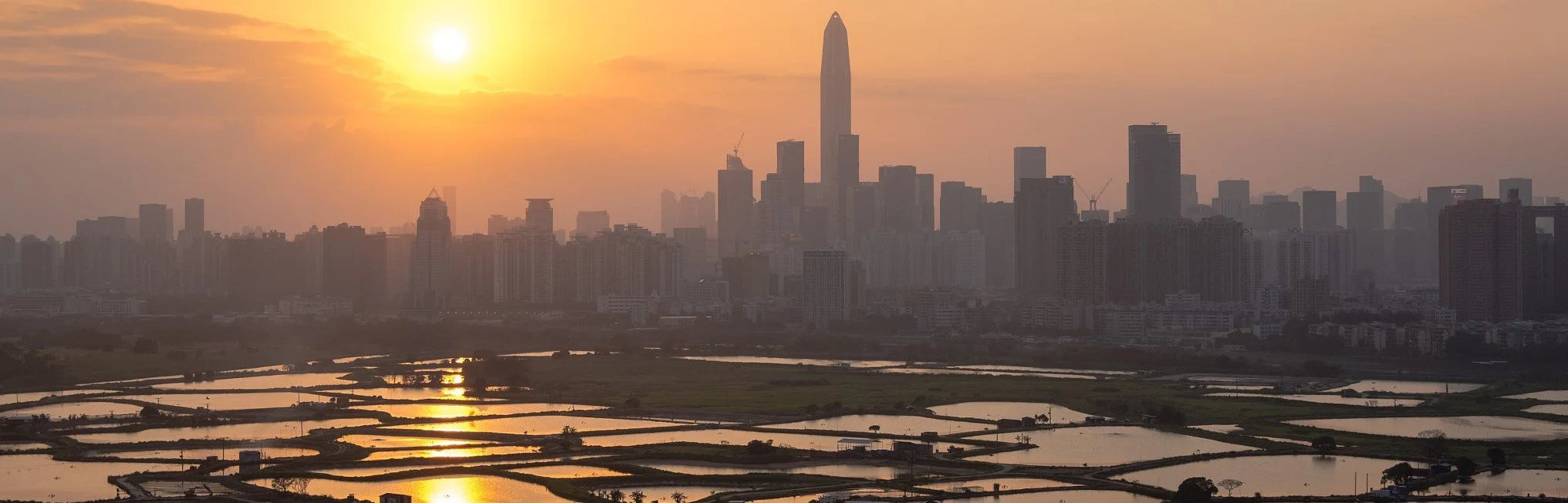
Shenzhen skyline viewed across Hong Kong wetlands (Benhui31/Wiki Media)
Nature is not merely scenery. It is infrastructure. It is knowledge. It is resilience. And increasingly, it may prove to be one of the greatest sources of scientific and economic discovery of the 21st century.
The tragedy is not only that species are disappearing. It is that humanity may be silencing voices we have not yet learned how to hear.
Published by Basilinna Institute. All rights reserved.
Dive deeper
Explore more of our insights on biodiversity, nature finance, and beyond