China’s Consumer Economy: The Next Phase of Competition, Part 1
Dive into the story of China’s consumer economy—where it stands today, how demand is shifting, and what it means for future growth and economic stability—in the first part of this three-part series.
By Leigh Wedell, Chynna Hawes, and Ruihan Huang
May 11, 2026

As the United States and China seek greater stability in what remains a fraught relationship, identifying economic issues that can serve as practical anchors matters. One that has been largely unresolved is China's need to strengthen consumer demand, an issue where opportunities intersect in ways that are both bilateral and global.
In this three-part series, we examine where China's consumer economy stands today, how demand is shifting, and where more targeted progress could help unlock a new phase of growth.
the brief
A level set on what the data actually shows
Everyone understands China has a massive consumer market. What’s less understood is how contradictory that story is: a market defined by scale, but still untapped in its potential.
For decades, China’s growth has been driven by investment and exports, with capital flowing into infrastructure, industrial capacity, and manufacturing. Credit allocation has largely favored state-linked sectors and large-scale production, rather than households and small businesses. That model delivered extraordinary results—lifting hundreds of millions out of poverty and integrating China into global supply chains—but it also created a structural imbalance. China became exceptionally strong at producing goods and comparatively less dependent on domestic demand to absorb them.
That imbalance is well understood—but only partially addressed by Chinese policymakers—and will continue to shape China’s next phase of growth, with significant implications for the global economy.
The breakdown
China’s Consumer Market Is Already Enormous…
~US$7.2 trillion in consumer spending
Over 500 million middle-income consumers
Second-largest consumer market globally
China’s economy is the second largest in the world, as is its consumer market, behind the U.S. for both. Its US$7.2 trillion consumer market is currently less than half that of the U.S. which hit US$16 trillion in Q4 alone. Notably, it has a middle class larger than the U.S. population—about the size of the EU’s—and accounts for 20% of the world’s middle class. And it’s growing. In November 2025, China’s Commerce Minister projected that figure would double in the next 10 years. This bodes well for consumer growth as roughly two-thirds of global household consumption comes from the middle class.
China’s economic growth has historically been powered by investment and production, supported by a financial system that channels capital toward industry and infrastructure. That model has reinforced China’s position as the world’s leading manufacturer and exporter, but it has also meant that household demand plays a more limited role in sustaining growth. The result is an economy that is highly efficient at producing goods, but less balanced in generating domestic consumption.
Despite its size, the role of consumption within China’s broader economy tells a different story. At 40% of GDP, household consumption is far below the global average of 63%. In high-income economies such as the United States and Europe, household consumption typically accounts for 60-70% of GDP. In ASEAN and other BRICS nations, consumption varies more widely but still accounts for roughly 50-60% of GDP.
It’s Not Just About Income—It’s About Confidence
Chinese incomes continue to grow, albeit more slowly than before COVID and more unevenly across regions and sectors, but consumption has not kept pace as standard models would predict. Income pressures are real, but those pressures do not fully explain the persistence of weak consumption.
Chinese households continue to save at high levels for a number of reasons, even when income is stable. Chinese consumers are culturally predisposed to saving, and that’s compounded by uncertainty about future financial security. Wealth is heavily concentrated in property, and the prolonged downturn in the real estate sector has eroded both balance sheets and confidence. Also, gaps in the social safety net, particularly around healthcare, pensions, and elderly care, translate into high precautionary savings. In this context, high savings rates are a rational response to risk and uncertainty. The issue is not simply whether consumers can spend, but whether they feel confident doing so.
Policy Is Moving—But Incrementally
Subsidies for appliances and green goods
Incremental reforms to pensions, healthcare, and hukou
Chinese policymakers are well aware of the need to strengthen domestic demand and have introduced a range of targeted measures to support consumption. These include subsidies for durable goods and green products, as well as incremental reforms to social systems aimed at reducing precautionary saving. So far though, these efforts have been limited in scope. Addressing the underlying drivers of household behavior—such as income security, wealth stability, and access to services—requires deeper structural reforms, which are more complex and politically costly. During the March “Two Sessions”, China’s annual legislative meeting, legislators doubled down on the current plan, extending the incremental approach.

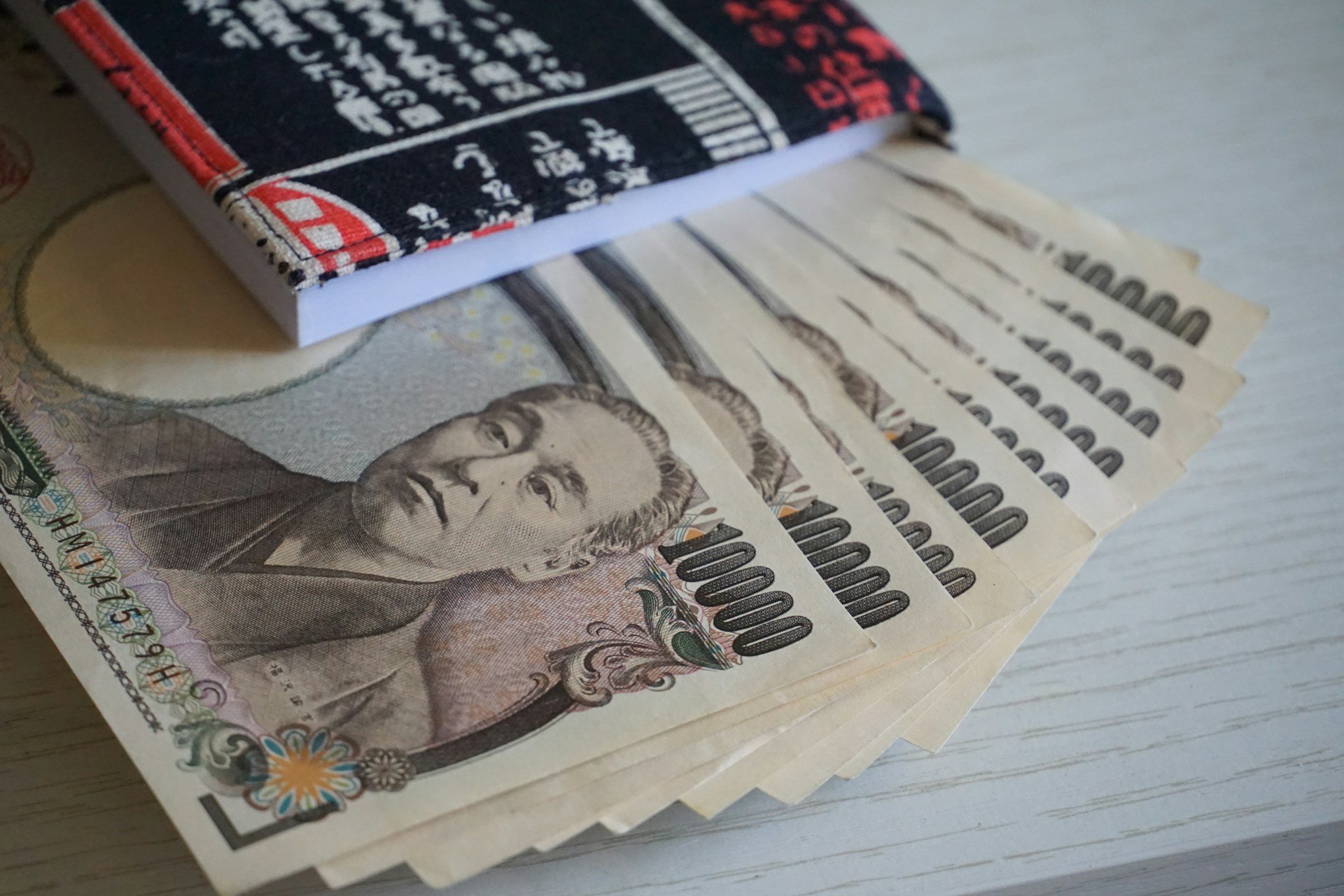
Beijing, China (Unsplash/Jimmy Jin)The Gap = The Opportunity
Raising consumption from 40% to 50% of GDP would equal ~US$700B+ in new annual demand
It should also translate into a new engine of growth for the Chinese economy
Fixing the gap between China’s current consumption levels and those of other major economies opens significant opportunities. Even a partial shift toward a more consumption-driven model would unlock substantial new demand. Increasing consumption’s share of GDP by 10 percentage points over the next decade would generate a little over US$700 billion in additional annual spending, equivalent to adding the consumer market of a mid-sized economy each year, by our estimates. This would be a much-needed boost to the stalled Chinese economy, and it would have meaningful implications for global growth, making consumption one of the few areas where China’s domestic priorities and global economic interests meaningfully align.
consumption levels
opportunity
Unlocking consumption will be a structural shift requiring sustained policy focus and, likely, external reinforcement. For the United States and global business community, this represents a clear and underutilized point of engagement. Unlike more contentious areas of the bilateral relationship, like trade and tariffs, stronger Chinese consumption aligns with the interests of both economies and the global system. In that sense, consumer demand is not just a domestic issue for China—it is a potential anchor for a more constructive economic dialogue.
The question is how that shift happens, what businesses need to do to position themselves to compete in the market, and how they can play a role in shaping policy that can unlock the market. That is where our trilogy turns next. In our next article, we take a look at changing consumer preferences and what that means for multinationals in the market and potential for U.S. bilateral trade engagement.
keep reading
Discover parts 2 and 3 of the three-part series, China’s Consumer Economy: The Next Phase of Competition


Published by Basilinna Institute. All rights reserved.
Dive deeper
Explore more of our insights on Asia-Pacific and beyond