China’s Consumer Economy: The Next Phase of Competition, Part 2
Dive into the story of China’s consumer economy—where it stands today, how demand is shifting, and what it means for future growth and economic stability—in the second part of this three-part series.
By Leigh Wedell, Chynna Hawes, and Ruihan Huang
May 11, 2026

As the United States and China seek greater stability in what remains a fraught relationship, identifying economic issues that can serve as practical anchors matters. One that has been largely unresolved is China's need to strengthen consumer demand, an issue where opportunities intersect in ways that are both bilateral and global.
In this three-part series, we examine where China's consumer economy stands today, how demand is shifting, and where more targeted progress could help unlock a new phase of growth.
the brief
China’s consumer market is the second largest in the world, but it remains underdeveloped relative to the size of its economy and has gone through structural change. How this next phase of consumption evolves will shape not only China’s growth trajectory, but also the opportunities available to companies globally. As growth slows, consumption patterns are shifting in ways that will reshape competition, brand positioning, and long-term opportunities for foreign companies.
With over RMB 50 trillion (USD 7.1 trillion) in retail sales in 2025, China remains the world’s second-largest consumer market after the United States. Yet scale alone tells only part of the story. Chinese consumers are becoming more pragmatic, more value-driven, and more selective in how they engage with both domestic and foreign brands.
In this second installment of our consumer trilogy, we examine how consumer preferences are evolving, and what these shifts mean for companies competing in China today. These changes are being shaped by a set of intersecting forces: economic pressure is driving more value-seeking behavior, rising national confidence is strengthening domestic brands, generational differences are reshaping how demand emerges, and demographic change, particularly China’s aging population, is introducing new structural constraints on consumption.
The breakdown
What is shifting as we look ahead
Chinese consumers are more pragmatic, value-driven, and increasingly digital
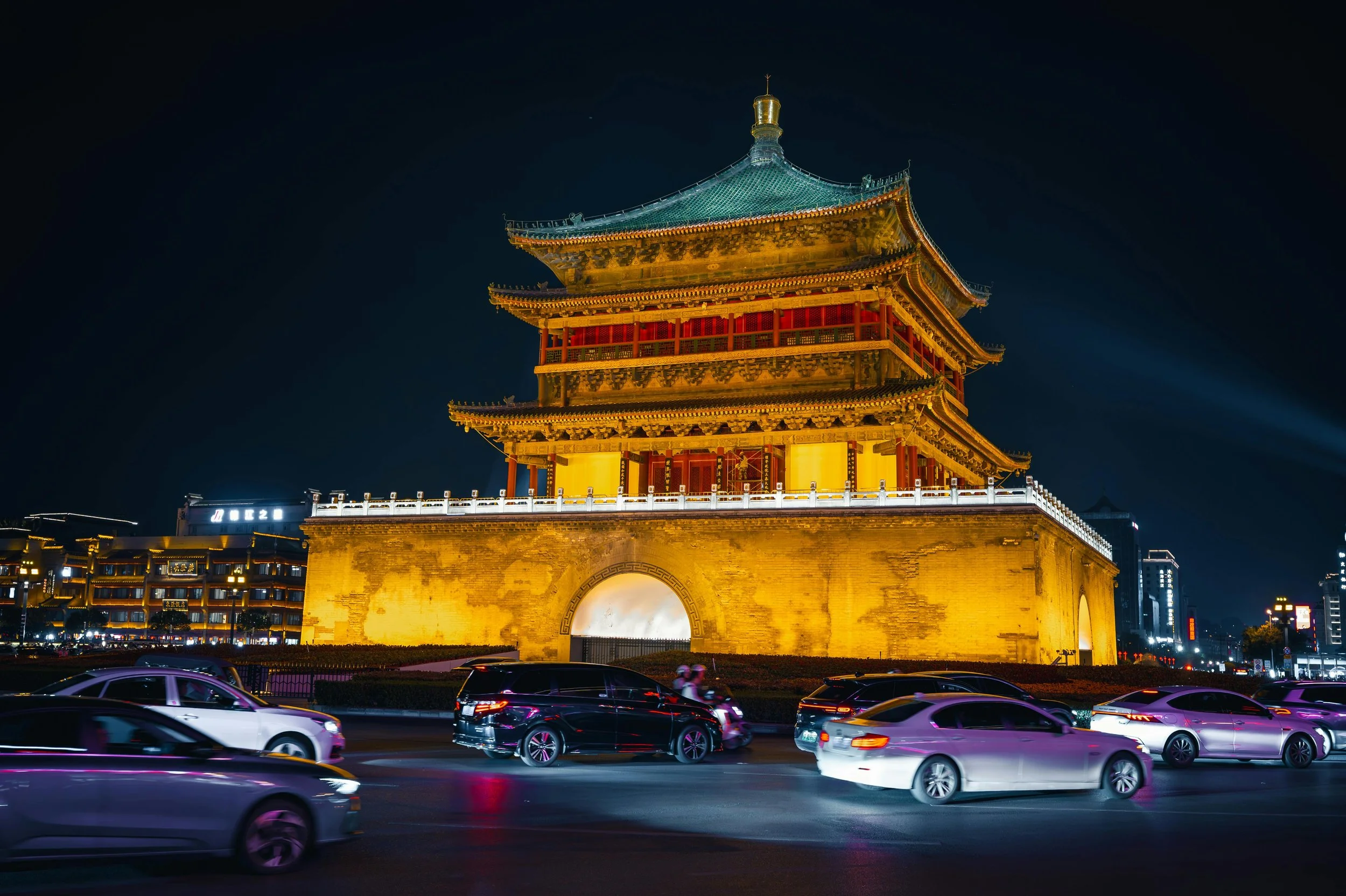
Xi'an Bell Tower, Xi'an, China (Pexels/幼聪 戴)
Amid an economic slowdown, Chinese consumers—like their counterparts globally—are increasingly questioning whether premium brands justify their prices, weakening brand loyalty in what is often described as “consumption downgrade.”
Recent consumer surveys reflect this growing price sensitivity and a broader search for value. According to an Accenture report, promotional discounts are becoming an increasingly important factor in attracting Chinese consumers to new brands, cited by 48% of respondents in 2025, up from 38% in 2021. While this trend is global, it is particularly pronounced in China, given weaker household confidence and the rapid expansion of discount-driven digital platforms.
Retail dynamics are reinforcing this shift. Discount formats have expanded rapidly, while e-commerce penetration has reached 39%, with platforms such as Pinduoduo and Douyin gaining share by emphasizing price transparency, group buying, and promotional pricing. Warehouse-style retailers and private-label products are also gaining traction as consumers prioritize value over brand prestige.
Price competition has intensified alongside these trends. In sectors such as electric vehicles and food delivery, companies have engaged in aggressive discounting and subsidy-driven competition. Regulators are now stepping up efforts to curb what is increasingly described as “involution”—a pattern of excessive, unsustainable competition—introducing measures to restrict below-cost pricing, limit subsidies, and promote more stable pricing behavior.
Value-seeking consumers are turning toward domestic brands
This shift increasingly favors domestic brands. Whereas foreign brands were once associated with superior quality and safety, recent surveys show Chinese consumers are increasingly choosing local alternatives across nearly every major category.
This shift is not driven by price alone. Chinese brands are increasingly competing on quality, design, and innovation. In smartphones, domestic brands now command more than 60% of the market, while the share of foreign brands has declined significantly over the past decade. In the automotive sector, domestic brands’ share of the passenger vehicle market rose from 45.9% in early 2022 to more than 70% by 2025, driven largely by the rapid expansion of the electric vehicle market. In many cases, Chinese products are not only cost-competitive but are also better aligned with local consumer preferences, particularly in areas such as digital integration and user experience.
A generational divide is reshaping how and where money is spent




China’s Gen Z, roughly born after 1998, accounts for about 15% of the population and will play a central role in shaping future consumption. Despite record numbers of university graduates, this cohort faces a weaker job market and broader economic uncertainty, making them more value-conscious than previous generations.
At the same time, they are more willing to spend on emotional fulfillment and lifestyle-driven consumption. According to People’s Daily, 64% of Chinese Gen Z cite emotional satisfaction as a primary driver of purchasing decisions, helping explain the popularity of categories such as collectibles, themed merchandise, and experiential consumption.
Having grown up alongside China’s economic rise, younger consumers also show a stronger preference for domestic brands than older generations. For many, these brands are not simply lower-cost alternatives but symbols of cultural identity and confidence in China’s ability to compete globally.
This trend is often described as the rise of “guochao” (国潮)—a movement that blends traditional Chinese cultural elements with modern design and branding. China’s guochao economy exceeded RMB 2 trillion (USD 285 billion) in 2023 and is projected to reach RMB 3 trillion (USD 430 billion) by 2028.
An aging population is reshaping consumption—and highlighting structural constraints
China’s demographic shift is becoming one of the most important forces shaping consumption. More than 22% of the population is over the age of 60, and that share is rising rapidly.
Older households tend to be more cautious spenders, in part because the systems that support aging, such as healthcare, eldercare, and long-term care services, are underdeveloped relative to demand. As a result, a significant portion of consumption potential is held back by precautionary savings and limited service availability.
This dynamic reinforces a broader point: the challenge is not simply encouraging households to spend more, but ensuring that the infrastructure and services exist to support that spending.
Services are emerging as a domestic driver, and a new source of external competition
If there is a bright spot in China’s consumption story, it is the rapid expansion of the services sector. This is not unique to China. Last month, reporting from The Wall Street Journal highlighted that service-oriented businesses in the United States now account for more than half of all retail space for the first time, overtaking traditional goods retailers and reflecting a broader shift toward experience- and service-driven consumption.
China is beginning to follow a similar path, while also positioning services as an increasingly important pillar of global economic competitiveness. As reflected in China’s 15th Five Year Plan, the country is placing greater emphasis on higher-value, knowledge-intensive services alongside its existing manufacturing base.
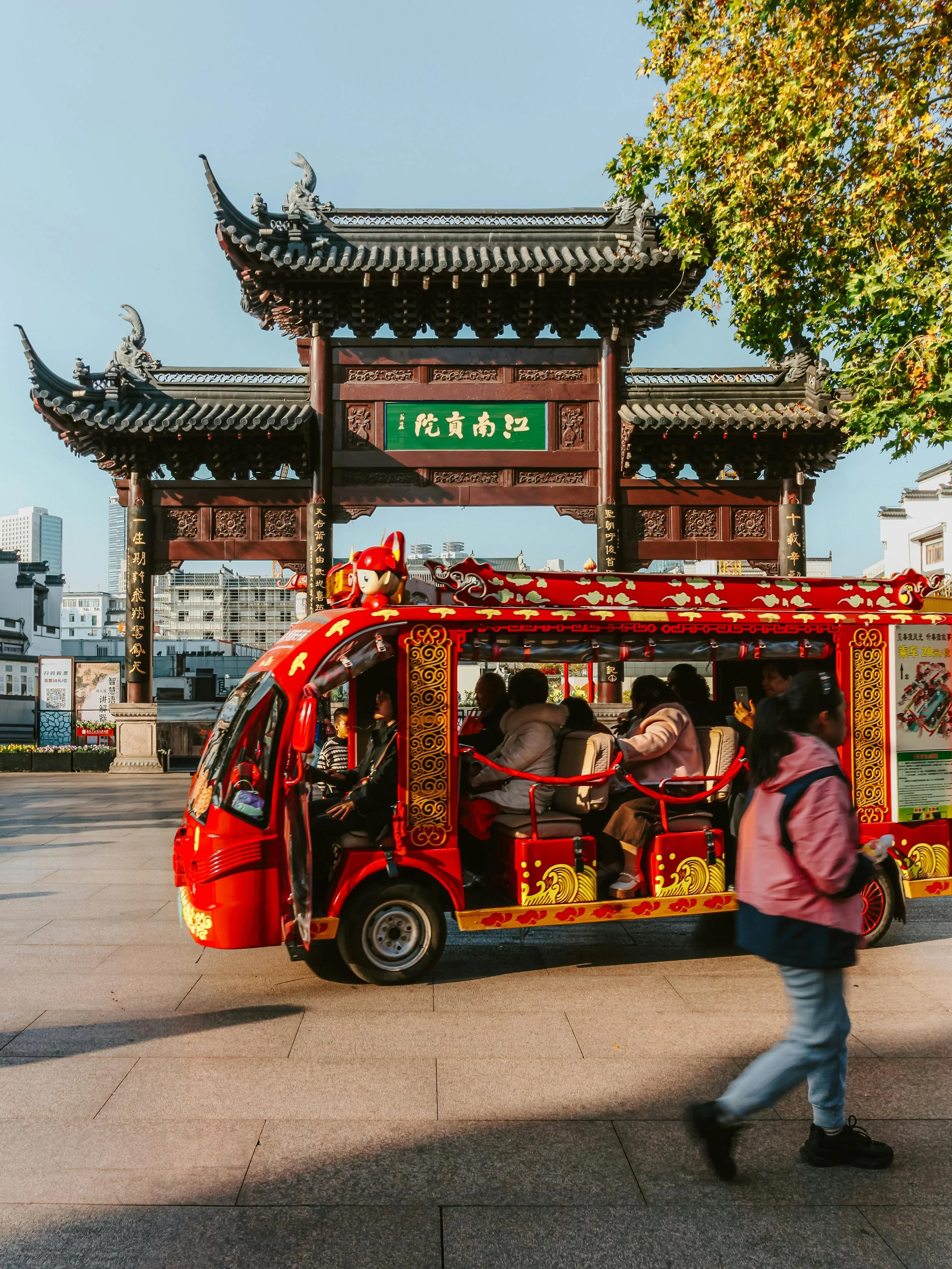
Tourist shuttle at Nanjing Confucius Temple, Nanjing, Jiangsu, China (Pexels/Abderrahmane Habibi)
Domestically, consumption patterns are shifting accordingly. The share of household spending devoted to food has declined significantly, from over 40% two decades ago to 29.3% in 2025, while service consumption has expanded. Services now account for 46% of household consumption, up from about 39% a decade earlier.
Growth is increasingly concentrated in service-driven segments of the consumer economy. Domestic tourism spending reached RMB 6.3 trillion (USD 900 billion) in 2025, while demand for digital content, lifestyle services, and other experience-oriented categories continues to rise.
For foreign firms, this is a significant but selective opportunity. In strategic sectors such as advanced technology, AI, and data, both the United States and China are moving toward greater restriction. Other areas, such as media and entertainment, remain highly sensitive and tightly controlled.
However, in more commercially oriented, consumer-facing services such as healthcare, tourism, and select areas of financial services, there is clear demand and potential commercial opportunity. Realizing that opportunity would require a more sustained effort by the Chinese government to address sector-specific regulatory and legal constraints, including licensing requirements, ownership limits, data rules, and approval processes that continue to limit foreign participation.
The bottom line: Competing for Chinese consumers now requires a different playbook
For multinational companies, China remains one of the world’s most important consumer markets, but where growth comes from and how to capture it has fundamentally changed.
Compete on value, not just brand
Premium positioning alone is no longer enough. Consumers are more price-sensitive and increasingly willing to choose domestic brands that deliver comparable, or superior, quality and innovation.
Localize deeply and move faster
Success requires operating more like a Chinese company: rapid product iteration, tight integration with digital and social commerce platforms, and offerings tailored to local preferences.
Look beyond Tier 1 cities, but with sector discipline
Lower-tier cities account for a large share of China’s recent consumption growth—often estimated at roughly 70–80% of incremental demand—yet remain frequently overlooked by foreign companies. While not relevant for every sector, these markets are an important source of growth in categories such as consumer staples, food service, and personal care.
Prepare for a more politicized consumer environment
Brand perception is increasingly shaped by geopolitics. When issues arise, communications alone are insufficient; companies need a broader political and government engagement strategy.
Advocate where it matters: services and market access
As China’s consumption shifts toward services, foreign firms face both opportunity and constraint. Progress will depend in part on sustained focus on sector-specific access and regulatory conditions in areas such as healthcare, tourism, and financial services.
keep reading
Discover parts 1 and 3 of the three-part series, China’s Consumer Economy: The Next Phase of Competition


Published by Basilinna Institute. All rights reserved.
Dive deeper
Explore more of our insights on Asia-Pacific and beyond