

As New Foreign Inflows Dry Up, China Turns to Reinvestment—and Shanghai Emerges as the Leading Local Test Case
By Ruihan Huang and Yelin Ma
January 21, 2026
Your talking points
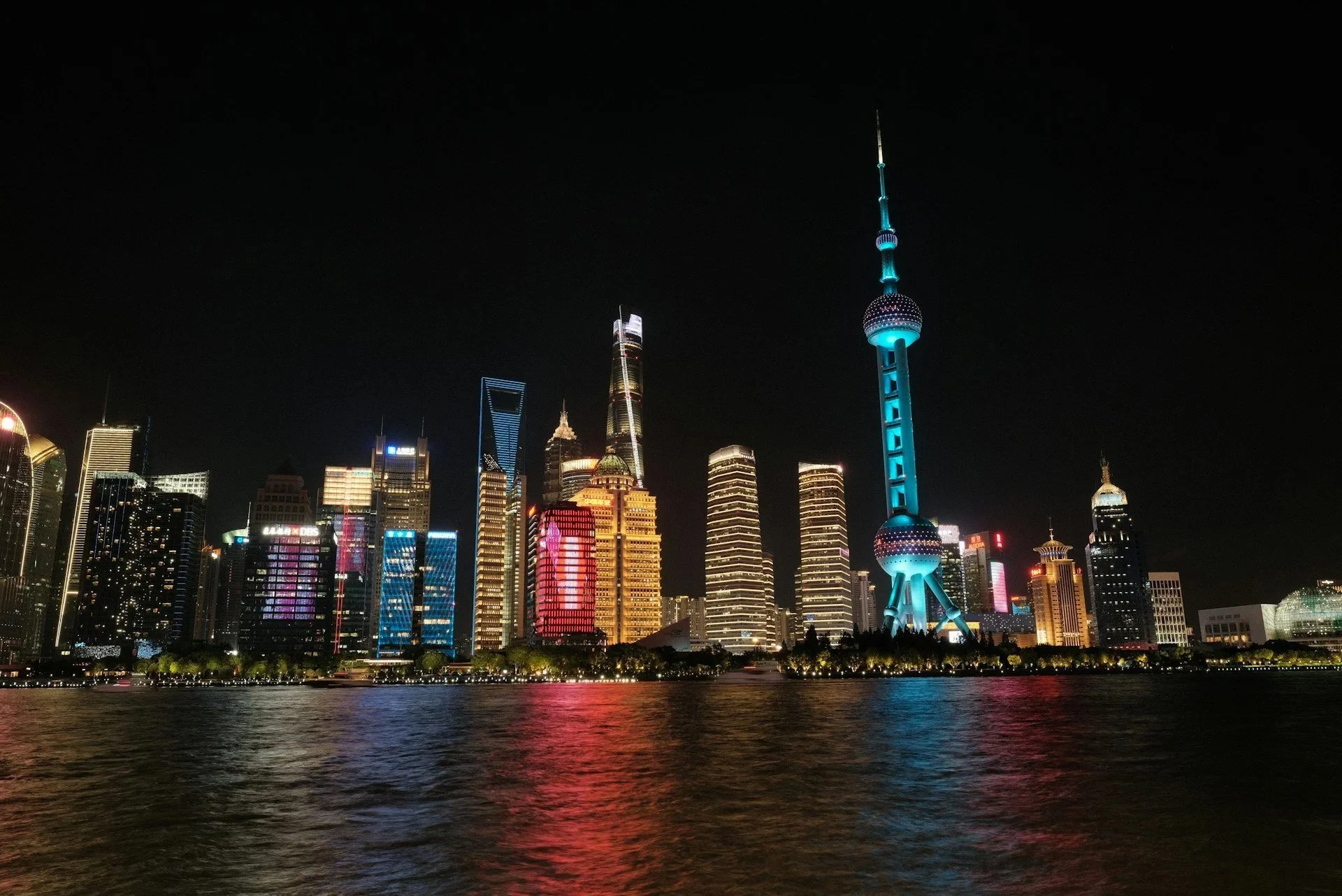
With new FDI at a three-decade low, China is pivoting toward foreign reinvestment of onshore profits—an overlooked lever that could be quantitatively as consequential as new inflows in sustaining overall FDI, if meaningfully mobilized.
As China’s largest hub for foreign firms, Shanghai moves first, offering an early window into how central directives on encouraging reinvestment may be implemented at the local level.
Instead of simply implementing central guidance, Shanghai is also reengineering reinvestment as a sector-specific development tool across its priority industries.
While potentially meaningful in scale, reinvestment incentives alone may not be sufficient to fully offset the headwinds to foreign investments posed by ongoing uncertainty around national treatment, a slow macroeconomic recovery, and geopolitical constraints.
The Brief
As foreign direct investment into China has fallen to its lowest level in decades, Beijing has sought not only to attract new inflows but also to encourage foreign firms already operating in the country to reinvest their onshore profits and expand their domestic footprint.
Following this central shift, Shanghai—China’s largest destination for foreign investment—has moved first. On January 6, 2026, the city issued a local policy package introducing 20 measures aimed at encouraging foreign reinvestment, focusing on investment facilitation, capital use, tax incentives, and equipment upgrades to make the redeployment of retained profits into new onshore investment more financially attractive.
Beyond the Points
With new FDI at a three-decade low, China is pivoting toward foreign reinvestment of onshore profits—an overlooked lever that could be quantitatively as consequential as new inflows in sustaining overall FDI, if meaningfully mobilized.
For the past four decades, attracting new foreign direct investment has been a central pillar of China’s market opening strategy. Policy incentives at both the central and local levels have therefore been overwhelmingly geared toward drawing in new overseas capital. This approach, however, is becoming increasingly difficult to sustain. Amid cyclical economic pressures and tightening geopolitical constraints, new foreign direct investment into China fell to its lowest level since 1990 in 2024, exposing the limits of this strategy.
Against this backdrop, policymakers have begun to focus on a long-overlooked source of capital: profits generated by foreign firms already onshore and reinvested domestically. Historically, such reinvestment was not treated as “new” investment and therefore did not qualify for many preferential policies. Foreign firms were often asked to bring in new capital from overseas rather than to redeploy profits earned within China.
This imbalance is now being reassessed. Reducing frictions around reinvestment may prove as consequential as attracting new inflows in sustaining overall foreign investment levels. The potential scale is significant. By our estimates, if foreign industrial companies were to reinvest just 20% of the RMB 1.76 trillion (US$ 252 billion) in profits they earned in China in 2024, this would amount to US$50 billion—exceeding the combined value of inward FDI recorded in 2023 and 2024.
As a result, seven central ministries issued a joint policy in July 2025 encouraging existing foreign firms to reinvest their profits domestically, making reinvestment another key pillar of China’s efforts to retain FDI and setting the stage for local experimentation in cities such as Shanghai.
As China’s largest hub for foreign firms, Shanghai moves first, offering an early window into how central directives on encouraging reinvestment may be implemented at the local level.
Home to nearly 100,000 foreign-invested companies—more than Guangzhou and Beijing combined, the cities with the second- and third-largest foreign business presence—Shanghai hosts the largest concentration of foreign firms in China. As a result, while other cities have issued scattered measures in response to central directives, Shanghai is so far the first and only local government to translate this guidance into a comprehensive policy framework explicitly designed to make reinvestment more financially attractive. It therefore offers an early indication of how the central government’s support for reinvestment is being converted into concrete, operational instruments at the local level.
First, echoing central policy issued in June 2025, Shanghai has reintroduced a 10% tax credit on reinvested profits, offsetting withholding income tax for eligible projects between January 1, 2025, and December 31, 2028. Unlike earlier tax-deferral policies, which merely postponed payment, this mechanism provides an immediate, quantifiable financial benefit, with unused credits allowed to carry forward. The incentive, however, is still narrowly defined: reinvested equity must be held for at least 60 consecutive months, and eligible projects are limited to industries listed in the Catalogue of Encouraged Industries for Foreign Investment.
Second, Shanghai has moved swiftly to align local implementation with a central decision to repeal over-decade-long restrictions on foreign-invested holding companies’ use of onshore RMB loans for equity investment. Under the previous regime, such firms were explicitly prohibited from using domestic loans for reinvestment, forcing them to rely on offshore funding and time-consuming capital injections from overseas parent companies—even when capital was already earmarked for China. The repeal now allows holding companies to substitute lower-cost onshore financing for offshore capital, reducing both execution time and financing costs.
Third, Shanghai has expanded the use of a facilitation channel for medium- and long-term foreign debt registration, allowing qualified non-financial companies to complete the process directly through banks, thereby significantly shortening processing time. While the mechanism was first introduced in 2022, this action marks a shift from case-by-case approval to more predictable, standardized use, enabling foreign-invested enterprises to reduce exposure to exchange-rate risk and convert “overseas related-party loans” into sizable onshore cash pools for reinvestment.
Instead of simply implementing central guidance, Shanghai is also reengineering reinvestment as a sector-specific development tool across its priority industries.
Rather than simply echoing national directives, Shanghai is also using reinvestment as a targeted policy lever to advance its local development priorities—most notably in services, high-end manufacturing, and biopharmaceuticals and medical devices.
In services, where central guidance remains largely broad-based, Shanghai has introduced more granular, sector-specific incentives to steer reinvestment toward areas it considers structurally important, including value-added telecommunications, healthcare, biotechnology, culture, education, and financial services. In high-end manufacturing, reinvestment is more tied to equipment renewal, capacity upgrading, and long-horizon land use, with additional support from municipal subsidies and special funds—deliberately channeling foreign capital toward Shanghai’s move up the industrial value chain. In biopharmaceuticals and medical devices, the incentives focus more on value-chain positioning over scale. By easing regulatory frictions for localization and encouraging reinvestment in production and R&D, Shanghai seeks to anchor higher-value segments of global value chains locally rather than merely expand medical output.
What’s more, Shanghai goes a step further by formally incorporating foreign firms’ onshore reinvestment into its investment-promotion evaluation framework for local officials, elevating reinvestment to a core performance metric with comparable weight to attracting new capital.
While potentially meaningful in scale, reinvestment incentives alone may not be sufficient to fully offset the headwinds to foreign investments posed by ongoing uncertainty around national treatment, a slow macroeconomic recovery, and geopolitical constraints.
While the reinvestment measures lower the operational barriers for foreign firms to redeploy profits onshore and may ease some of the immediate pressure on China’s ability to retain foreign capital, their capacity to materially increase foreign participation remains constrained. Many of the factors hampering foreign investment decisions lie beyond the mechanics of reinvestment itself.
First, foreign firms’ concerns about unequal treatment relative to domestic firms persist, albeit partially eased. While recent policies allow certain goods produced by foreign-invested firms to be classified as “domestic products” for government procurement and create a more accommodating near-term environment, the criteria for this classification remain transitional and are expected to be further revised in the coming years. As a result, some foreign firms continue to assess how national treatment may be applied in practice over the longer term, which can factor into decisions on whether and how quickly to expand their presence in China.
Second, macroeconomic conditions limit the commercial appeal of reinvestment. Although recent technological advances have lifted Chinese stock markets, the broader recovery remains fragile, and weak domestic demand continues to squeeze corporate margins. For many foreign firms, the question is not just whether reinvestment is procedurally easier, but whether expected returns justify deeper capital commitments amid subdued growth.
Finally, geopolitical factors, especially U.S.–China relations, remain the most binding constraint. Heightened U.S. scrutiny of outbound investment into China has increased uncertainty at the headquarters level, complicating long-term capital allocation decisions. Following earlier trade disputes, some U.S. firms have already adopted “China +1” strategies to diversify supply chains and reduce exposure, limiting the scope for all kinds of investment-led expansion in China.
Published by Basilinna Institute. All rights reserved.