2026 Iran War
Monitoring report covering developments in the 2026 Iran War as of March 16, 2026
By the Basilinna team
March 16, 2026

overview
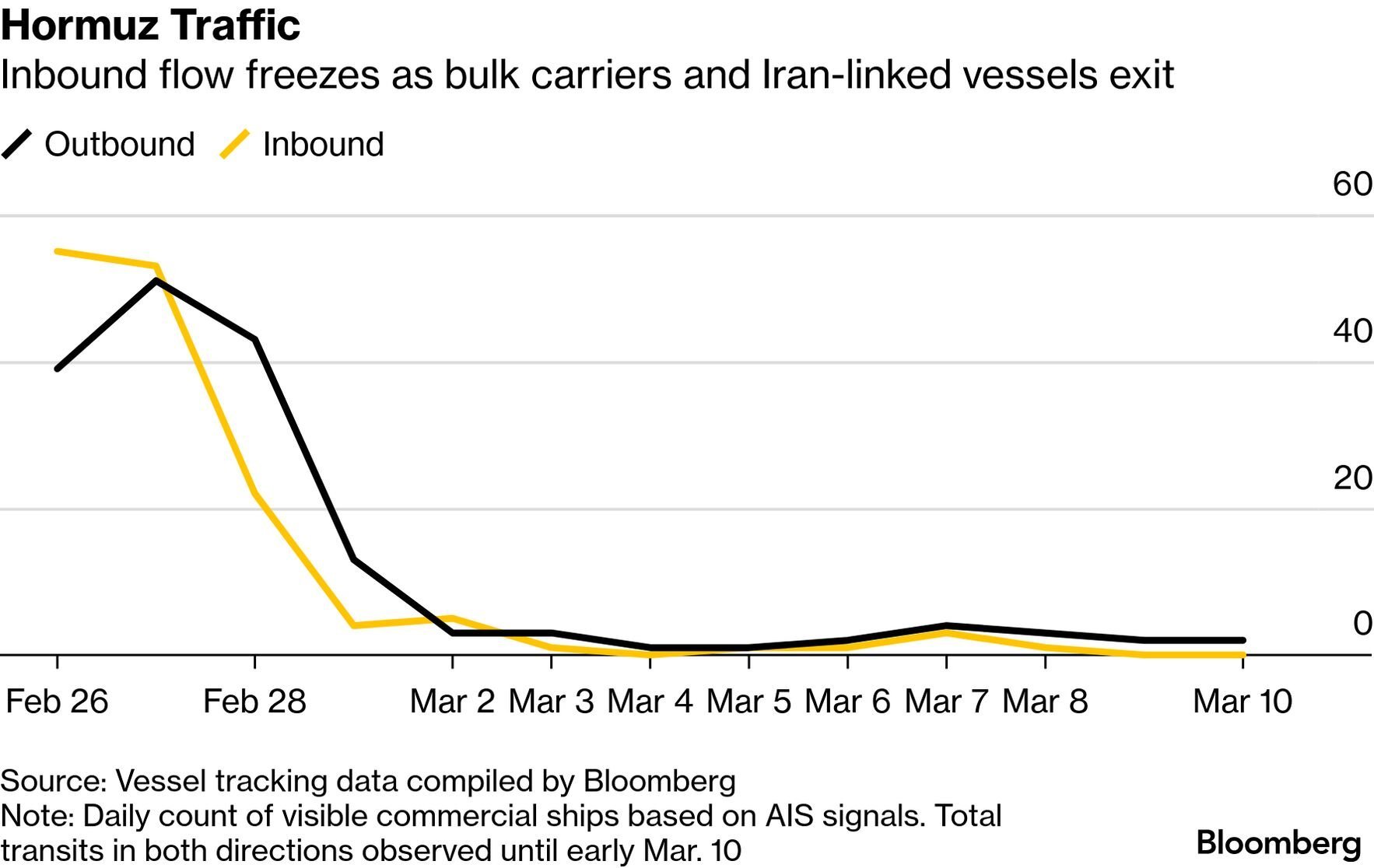
As the war enters its third week, the most immediate concern is the rising tensions around the Strait of Hormuz, where reduced Western tanker traffic, rising insurance costs, and ongoing security risks are raising questions about how — and whether — confidence in transit through the corridor can be restored.
Tehran Applies Economic Pressure as a Strategic Weapon
In addition, Iran appears to be broadening its retaliation. Rather than relying only on direct military objectives, Tehran is increasingly imposing costs on the wider regional economic system. Gulf aviation, export infrastructure, ports, and logistics hubs are being drawn more directly into the conflict. Iran is also focusing on data centers which help support military intelligence but also have an important civilian purpose. The Dubai Airport continues to be a target, including a recent drone strike that forced a temporary suspension of operations, together with renewed disruption at Fujairah, underlines that the war is no longer confined to battlefields or even to Hormuz itself. Iran is targeting the infrastructure that supports the Gulf’s role as a global hub for transit, tourism, air freight, and energy exports and increasing the economic impact.
Iran appears to be zeroing in on the energy infrastructure and Gulf shipping to create economic pressure on Gulf, Western and Asian governments to pressure the United States. By increasing the global cost of energy, Tehran hopes to use the outside pressure to lobby the Washington to shorten the duration of the conflict.
The external diplomatic picture is also expanding. President Trump is now publicly pressing NATO allies and major Asian energy importers, including China, to help secure Hormuz, warning that the alliance faces a “very bad” future if partners do not contribute. He argues that the U.S. has paid for protection in the past of the Strait, which has benefited the Chinese, Europeans and others, so now it is time for those countries to help share the burden with the U.S.
While no country including the U.K. or Japan have agreed to provide military ships, Europe is discussing possible options, including maritime security mechanisms to protect its ships transiting the corridor. On China, the White House has delayed the President’s trip in April. While they are hinting it is because of the lack of support in the Strait, it is more likely to be delayed because of the negative impression of the President being out of the country during a war, and especially on a State visit in a country that has been aligned with Iran.
On the military front, the Lebanon theater has crossed a more serious threshold. Israel has now announced limited ground operations in southern Lebanon against Hezbollah positions, moving beyond airstrikes and signaling that escalation on the northern front is no longer hypothetical. This does not yet indicate a full-scale invasion, but it materially raises the risk that the war broadens into a sustained Israel–Hezbollah confrontation.
Economically, countries remain on edge about the rising costs of oil especially in Europe and the United States. Strategic reserve releases of oil and other market-stabilization measures will help to soothe markets, but oil remains elevated – hovering around $100 a barrel – but not spiking at this stage. Increasingly, the issue is less about whether policymakers can smooth short-term volatility, but whether they can sustain confidence if Gulf shipping remains impaired for an extended period.
Russia Reaps Geopolitical Benefits
A notable secondary effect is that the crisis is creating geopolitical and commercial beneficiaries outside the Gulf. Russia, in particular, is one the winners. As Gulf barrels become harder to move and Asian buyers scramble for prompt replacement cargoes, Russian crude has become more attractive again, especially in India and China. Analysts report that Russian shipments have surged in recent weeks, as refiners seek prompt deliveries while alternative supply chains adjust. Even President Trump has raised the idea of removing sanctions on Russia to allow alternative energy sources, which is putting Europe in a real quandary between concerns of rising energy costs yet wanting to punish Russia over Ukraine.
Out of concern, the International Energy Agency made up of 32 countries agreed to a coordinated release of about 400 million barrels, the largest coordinated strategic oil release in history. By releasing oil into the market, governments hope to reassure traders that supply shortages will not spiral into a full-scale energy crisis.
However, the effectiveness of these measures will depend heavily on how the conflict evolves. Reserve releases can stabilize prices in the short term, but they cannot replace the sustained flow of Gulf exports if shipping remains disrupted for an extended period. Strategic reserves are also finite. If the conflict drags on for months rather than weeks, policymakers may face difficult decisions about how much of those reserves they are willing to deploy.
Regional Impacts Rise Worldwide
The economic impact is already visible across multiple regions.
In Asia, the world’s largest energy-importing region, governments and refiners are increasingly focused on securing alternative supply arrangements as shipments through the Strait of Hormuz remain severely constrained. That said, there are multiple reports that Chinese ships are being give safe passage by Iran and that there has been limited impact on their imports, which were below 10% even before the war.
Japan, South Korea, and India all depend on Gulf crude and LNG transported through the Strait. With tanker traffic reduced and insurance costs rising sharply, refiners are seeking replacement barrels from producers such as Russia, Brazil, and Canada. However, substitute supplies often require longer shipping routes and delayed delivery timelines, meaning that even when alternative contracts are secured, the oil may not reach Asian markets for several weeks or months.
In Europe, the conflict is reviving memories of the 2022 energy crisis triggered by Russia’s invasion of Ukraine. European policymakers are particularly sensitive to the inflationary risks associated with sustained oil prices above $100 per barrel. Higher energy costs threaten to complicate monetary policy decisions, slow economic recovery, and increase political pressure on governments already managing elevated cost-of-living concerns. As a result, European leaders have supported coordinated action through the International Energy Agency and are now actively discussing potential security initiatives to help stabilize shipping through the Strait of Hormuz.
In the United States, oil prices have been rising but are buffered by strong domestic production. Even so, the global nature of energy pricing means that disruptions in the Gulf are putting upward pressure on gas prices and concerns over rising inflation which is concerning for Republicans going into what is going to be a tough set of midterm Congressional elections. The White House has therefore supported international coordination on strategic reserve releases while pressuring other countries to help provide safe passage for ships in the Strait.
In the Gulf, the economic implications are more complex and immediate. Several major energy producers—including Saudi Arabia, the United Arab Emirates, Kuwait, and Iraq—are facing logistical constraints because exports cannot move freely through Hormuz. Reduced tanker traffic means that even as global oil prices rise, these countries are still struggling to maintain normal export volumes so it balances out.
At the same time, the conflict is beginning to affect the broader economic sectors that Gulf governments have spent years developing as part of economic diversification strategies. Tourism is down significantly in the region and in Dubai, several hotels are closed. Drone strikes continue to threaten the airport, diverting planes slowing cargo and significantly reducing direct and transit visitors. And several major sports and entertainment events, including the F-1, have been canceled or consideration of being canceled.
The economic costs of the conflict may even have a more significant long term impact on the region than the destruction of military infrastructure.
updates
U.S. and Israeli forces expanded their campaign against Iranian energy infrastructure with strikes near Kharg Island, Iran’s principal crude export terminal. Because the island handles most of Iran’s oil exports, even partial disruption carries major strategic implications and signals a willingness to pressure Iran economically as well as militarily. So far, attacks have been limited to the military infrastructure, but Trump has threatened to bomb the oil infrastructure despite the heavy costs it would incur.
The Strait remains open but only to ships where Iran approves passage. Western tanker traffic has fallen sharply due to missile threats, suspected naval mines, drone attacks, and soaring war-risk insurance premiums.
Drone attacks near Dubai International Airport temporarily halted flights and caused a fuel tank fire, while oil loading operations at Fujairah were disrupted after a separate drone-related incident.
Israel has begun limited ground operations in southern Lebanon, marking a shift beyond airstrikes and raising the risk of a broader confrontation with Hezbollah.
The U.S. has increased naval deployments across the region, including the movement of the USS Tripoli toward the Gulf as part of broader force positioning.
Iranian military officials warned that the logistical and support facilities serving the USS Gerald R. Ford carrier strike group could be considered targets if the United States expands its role in the conflict.
The Pentagon has elevated its inquiry into the strike that hit a girls’ school in Minab to a formal command investigation, adding political and reputational pressure on Washington. It is believed that the hit was based on outdated intelligence.
What to watch
Whether a functioning multinational Hormuz security mechanism can be created by the US and an international force.
Whether Iran continues expanding attacks beyond the Strait itself to surrounding Gulf infrastructure.
Whether Israel’s limited ground operations in southern Lebanon evolve into a broader ground campaign.
Whether global energy markets increase supply from Russia and other non-Gulf producers.
Whether infrastructure disruptions begin producing larger second-order economic effects across aviation, logistics, and financial markets.
Published by Basilinna Institute.More Insights By Basilinna