Cultural Diplomacy: The Soft Power That Crosses Borders
A look back on the United States’ history of cultural exchanges and the need for preservation of that which can unify.
By Irina Bokova
July 7, 2026
With the recent celebration of the United States 250th anniversary of the Declaration of Independence in 2026,
Culture may be one of the most effective tools for deepening U.S. engagement with the world—not because it projects power, but because it creates relationships, builds trust, and fosters collaboration.
International jazz sensation Dizzy Gillespie, performing with "Giants of Jazz" in Hamburg, 1973 (Wikimedia/CBS Television),
There is a long and deep history of positive engagement with the world in the area of culture and education. It is worth reminding that the memorable lines that open UNESCO’s Constitution: “Since wars begin in the minds of men, it is in the minds of men that the defenses of peace must be constructed” were penned with the help of Archibald MacLeish, Librarian of Congress, a poet, playwright, lawyer and statesman, whose roots were firmly planted in both the new and the old worlds.
Brass and Ivory: The Legacy of Jazz as the United States’ Cultural Export
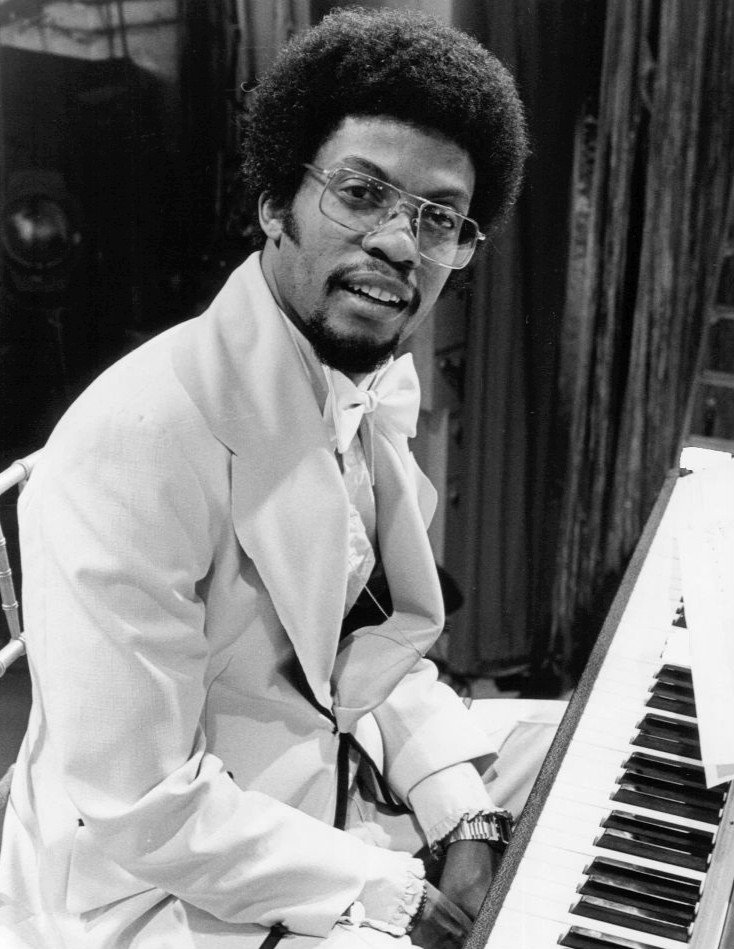
Photo of Herbie Hancock from an appearance on a television special on jazz, 19 March, 1976” (Wikimedia/CBS Television)
There are many recent examples of the contribution of the U.S. to foster the power of cultural diplomacy and of culture to unite, to pass the message of mutual respect, of dialogue and peace. Having long-upheld a tradition of cultural diplomacy over the course of the 20th Century - from museum exchanges and Jazz ambassadors to the protection of world cultural and natural heritage–again an idea that was born also to a large extent in the US.
In November 2011 the UNESCO proclaimed 30 April as “International Jazz Day”, at the initiative of music legend Herbie Hancock, whom I had the privilege to nominate as UNESCO Goodwill Ambassador that same year.
Born in the United States, jazz transformed into an open dialogue between instruments, peoples and cultures, a universal language of mutual respect and intercultural dialogue. Jazz is a gift to the world, whose power UNESCO recognized and embraced with enthusiasm, because, in the words of Herbie Hancock himself: "Jazz has always been about bringing people together, breaking barriers, and inspiring creativity across cultures. International Jazz Day reminds U.S. that music has the power to transcend borders, foster dialogue, and spark joy and hope.
Today, 15 years after its creation, International Jazz Day is a huge success, celebrated across 190 countries. And it is more than one concert. Schools, musicians, artists, historians and jazz enthusiasts from all over the world get together for performances, jam sessions, masterclasses and discussions in clubs, theaters and public squares. An incredible success story of cultural diplomacy and of the cooperation between UNESCO and the Unites States that reminds us of everything we share!"
The Culture of Biodiversity
World heritage protection may be one of the those areas where the United States can simultaneously advance diplomacy, education, scientific cooperation, and cultural understanding while creating benefits that endure well beyond the anniversary itself.
The man that strongly promoted this idea, was the Honorable Russell E. Train. Russell Train left an indelible mark on environmental protection in the US. He left also a deep imprint on the world -- through his leadership of the World Wildlife Fund and, not least, his vision of World Heritage.
Russell Train participated in the 1965 White House Conference, and it was his discussions with Dr. Joseph Fisher, Chairman of the Committee on Natural Resources, that produced the call for the creation of a World Heritage Trust – in their words: “to identify, establish, develop and manage the world’s superb natural and scenic areas and historic sites for the present and the future benefit of the entire world citizenry.”
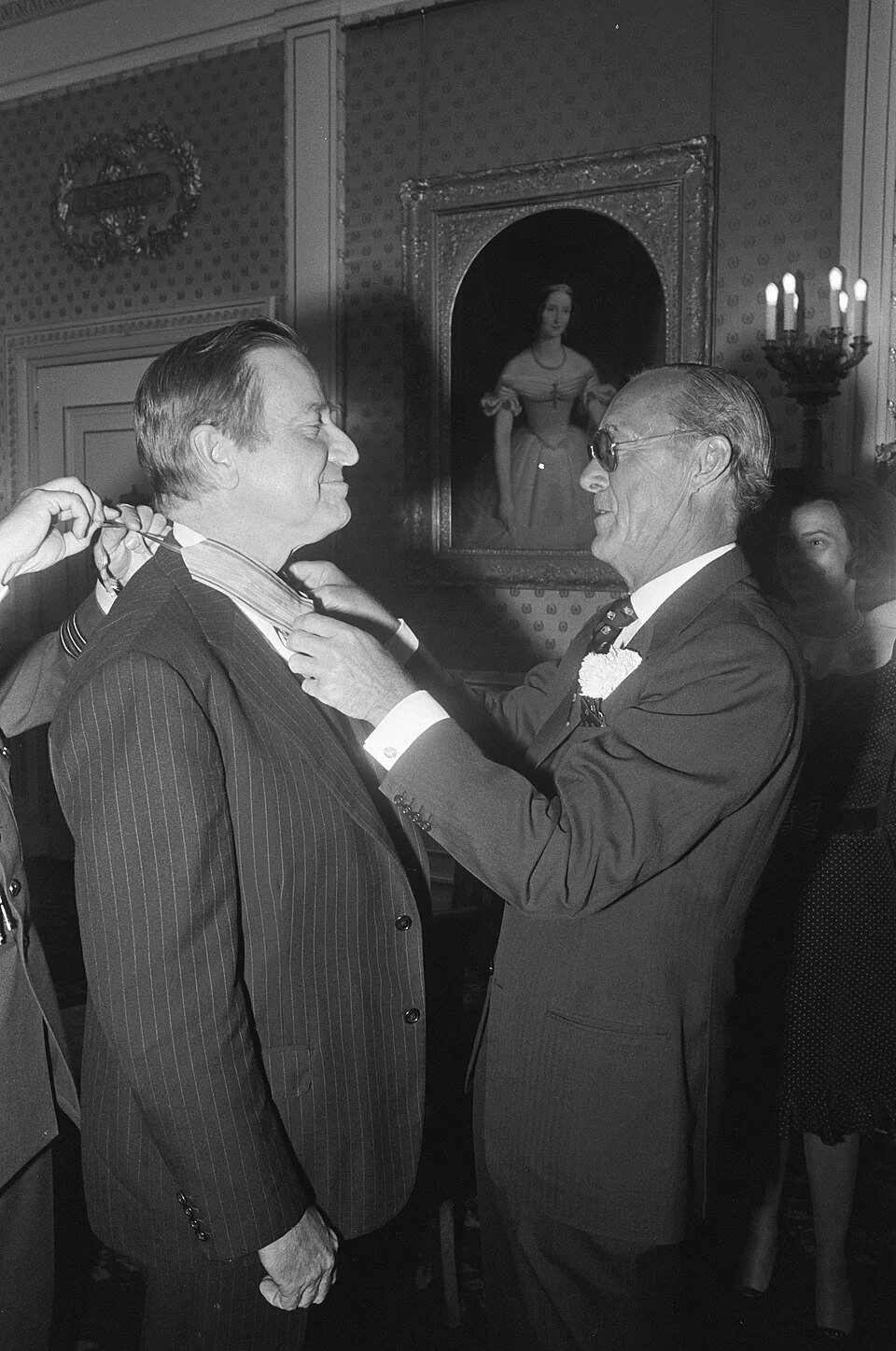
“Presentation of the Golden Ark by Netherland Prince Bernhard to Russell Train. A merit presented to those who make major contributions to nature conservation – (wikimedia/ Hans Peters for Anefo)
Thus, the United States was actually one of the principal architects of the 1972 World Heritage Convention and was the first country to ratify it in 1973. The idea behind protecting places of "outstanding universal value" drew heavily from the American national park movement pioneered by Yellowstone.
Enduring Hope as an Institution
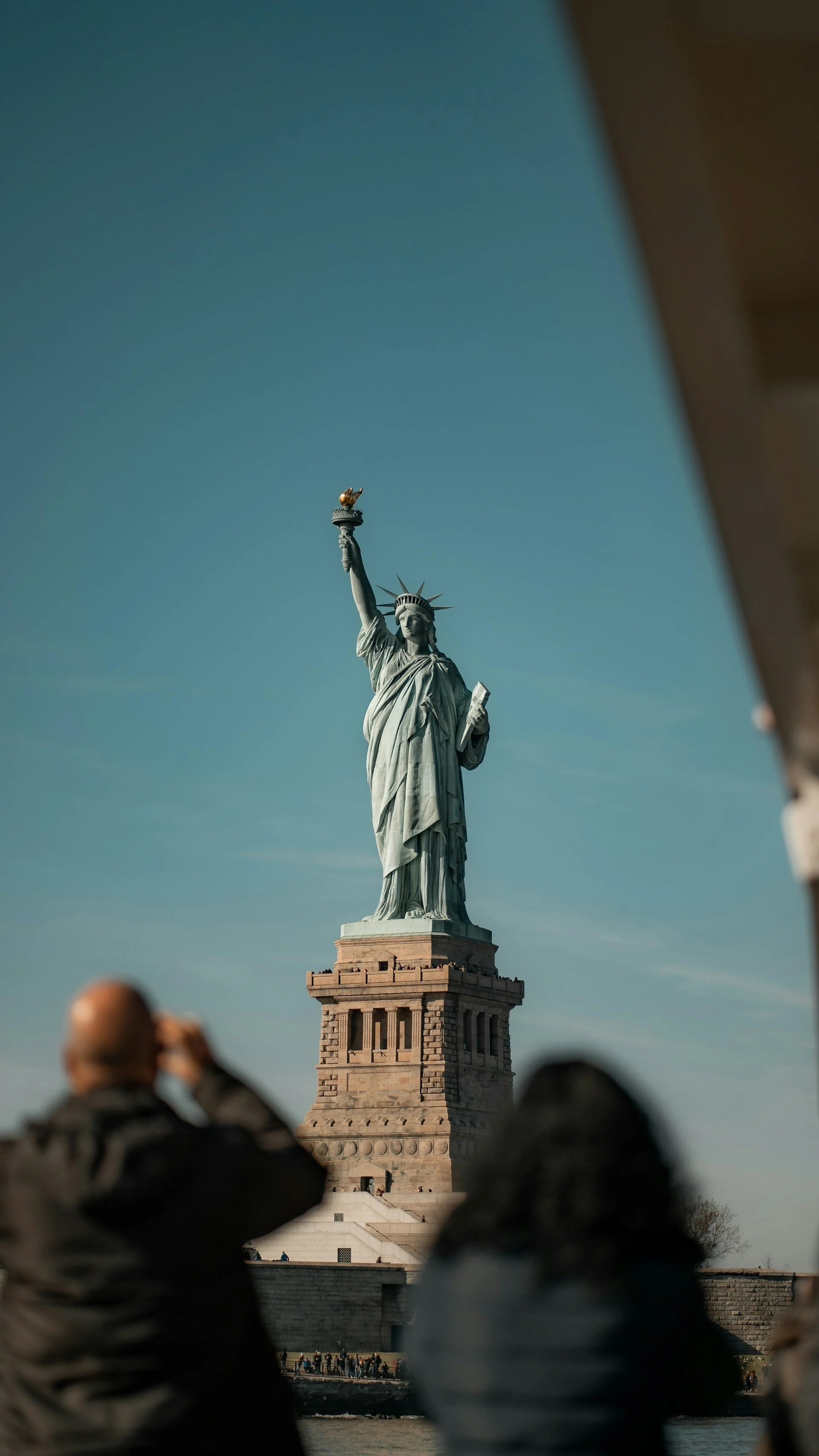
Lady Liberty (Unsplash/Riccardo Manieri)
Among the World Heritage Sites in the U.S. is the Statue of Liberty, inscribed because it is a defining symbol of the United States of America -- and also because of what it says for people across the world about liberty and about hope. The same goes for Independence Hall, where the Declaration of Independence and the Constitution were signed, whose influence stretches to parliamentarians, policy-makers, civil society activists across the globe.
One interesting fact; with 26 sites, the United States may have fewer World Heritage Sites than countries such as Italy, China, and Spain, but it remains one of the world's most influential countries in conservation science, park management, archaeology, and heritage preservation.
American institutions have helped establish many of the professional standards used internationally for museum conservation, digital preservation, collection management, emergency response after disasters and heritage risk assessment.
I believe that heritage protection is an underappreciated source of soft power
and that the United States can strengthen its international standing by supporting conservation of endangered cultural sites by conflict or climate change and by expanding its preservation and archaeological partnerships worldwide.
The Getty Trust is perhaps the clearest example. Through the Getty Conservation Institute, it works on preserving monuments, archaeological sites, museums, and collections across the world.
Institutions like the Getty Trust occupy a distinctive position in the global cultural ecosystem. They are not simply museums or grant makers; they act as international centers of expertise, funding, research, conservation, education, and collaboration. Their influence stems from a combination of substantial private philanthropy, scholarly capacity, technical leadership, and extensive global partnerships.
But perhaps the most important role of culture is not only artistic, educational, or economic.
It is relational. In a world marked by geopolitical competition, technological disruption, and social fragmentation, culture creates spaces where people can collaborate before they agree on everything else.

Shared experiences build connections across differences (Unsplash/Luis Pinho)
Published by Basilinna Institute. All rights reserved.
Dive deeper
More Insights by Basilinna.