

Our Insights

Featured Insights Selected by Our Experts
-
![]()
The Return of the Koh Ker Ganesha
with Brad Gordon, Channy Set, and Nguon Chhay Song | Hosted by Deborah Lehr
-
![]()
CES, Digital Trade, and the Future of Tech Supply Chains
with Ed Brytzwa | Hosted by Jake E. Jennings
-
![]()
Iran, The Days After: The Succession
By the Basilinna team
-
![]()
Why China Is Pushing Trade Facilitation Despite a Record Surplus
By Leigh Wedell and Ruihan Huang
-
![]()
Mexico Now America’s Top Trading Partner as USMCA Review Looms
By Abel Hibert, Senior Fellow
-
![]()
Nature as National Asset: How the Middle East Is Turning Biodiversity into Economic Opportunity
By Basilinna Deborah Lehr, Chair and CEO.
-
![]()
China Economic Stimulus Tracker
A comprehensive timeline of announcements and policy actions implemented by the Chinese government to stimulate economic activity.
-
![]()
From the Middle Kingdom to the Saudi Kingdom: Opportunities Abound
By Yasser Elnaggar, Chair of the Middle East and Africa







Explore all of our Insights, Interviews, Commentary, and More
The U.S.-China Relationship in the Months Ahead
By Chynna Hawes, Senior Vice President
In the wake of the Trump-Xi Summit in Beijing, Basilinna's leading China experts respond to the question: which new stabilizing forces—or points of friction—are most likely to shape the U.S.-China relationship in the months ahead?
The U.S.-China Relationship in the Months Ahead
By Gracie Sun, Chair of Asia-Pacific
In the wake of the Trump-Xi Summit in Beijing, Basilinna's leading China experts respond to the question: which new stabilizing forces—or points of friction—are most likely to shape the U.S.-China relationship in the months ahead?
The U.S.-China Relationship in the Months Ahead
By Leigh Wedell, President and COO
In the wake of the Trump-Xi Summit in Beijing, Basilinna's leading China experts respond to the question: which new stabilizing forces—or points of friction—are most likely to shape the U.S.-China relationship in the months ahead?

The U.S.-China Relationship in the Months Ahead
By Deborah Lehr, Chair and CEO
In the wake of the Trump-Xi Summit in Beijing, Basilinna's leading China experts respond to the question: which new stabilizing forces—or points of friction—are most likely to shape the U.S.-China relationship in the months ahead?
The U.S.-China Relationship in the Months Ahead
By Deborah Lehr, Chair and CEO, Leigh Wedell, President and COO, Gracie Sun, Chair of Asia-Pacific, Chynna Hawes, Senior Vice President, Kendra Schaefer, Senior Fellow, and Ruihan Huang, Director
As the United States and China seek greater stability in what remains a fraught relationship, identifying economic issues that can serve as practical anchors matters. One that has been largely unresolved is China's need to strengthen consumer demand, an issue where opportunities intersect in ways that are both bilateral and global. In this three-part series, we examine where China's consumer economy stands today, how demand is shifting, and where more targeted progress could help unlock a new phase of growth.
Tech and Trade Strategic Insights: Beyond the Headlines
By Jake E. Jennings, Chair of Technology and Trade
Bilateral Trade Management Will Increase Country-Specific Risk: The Administration has explicitly abandoned most-favored-nation treatment as U.S. trade policy's governing principle. CEOs should direct review of supply chain and market-access strategies that still assume WTO tariff ceilings as a practical constraint and prepare submissions for the forthcoming U.S.– China Board of Trade for comment process on the $30 billion non-strategic goods basket.

Biodiversity Is a Language We Are Only Beginning to Understand
By Deborah Lehr, Chair and CEO
As we mark International Day for Biological Diversity, we often speak about biodiversity in the language of loss: disappearing species, degraded ecosystems, shrinking forests, warming oceans. These statistics are staggering and important. Scientists estimate that we could lose up to half of the world’s species by mid-century if current trends continue.
Tech and Trade Strategic Insights: Beyond the Headlines
By Jake E. Jennings, Chair of Technology and Trade
Non-Tariff Barriers Become Core Trade Risk: Firms should map exposure across regulatory regimes, including digital rules, IP enforcement, and procurement, as market access increasingly depends on compliance with partner-country policies rather than tariff outcomes.
Trump-Xi Meeting: Strategic Competition Doesn’t Preclude Selective Cooperation
By the Basilinna Team
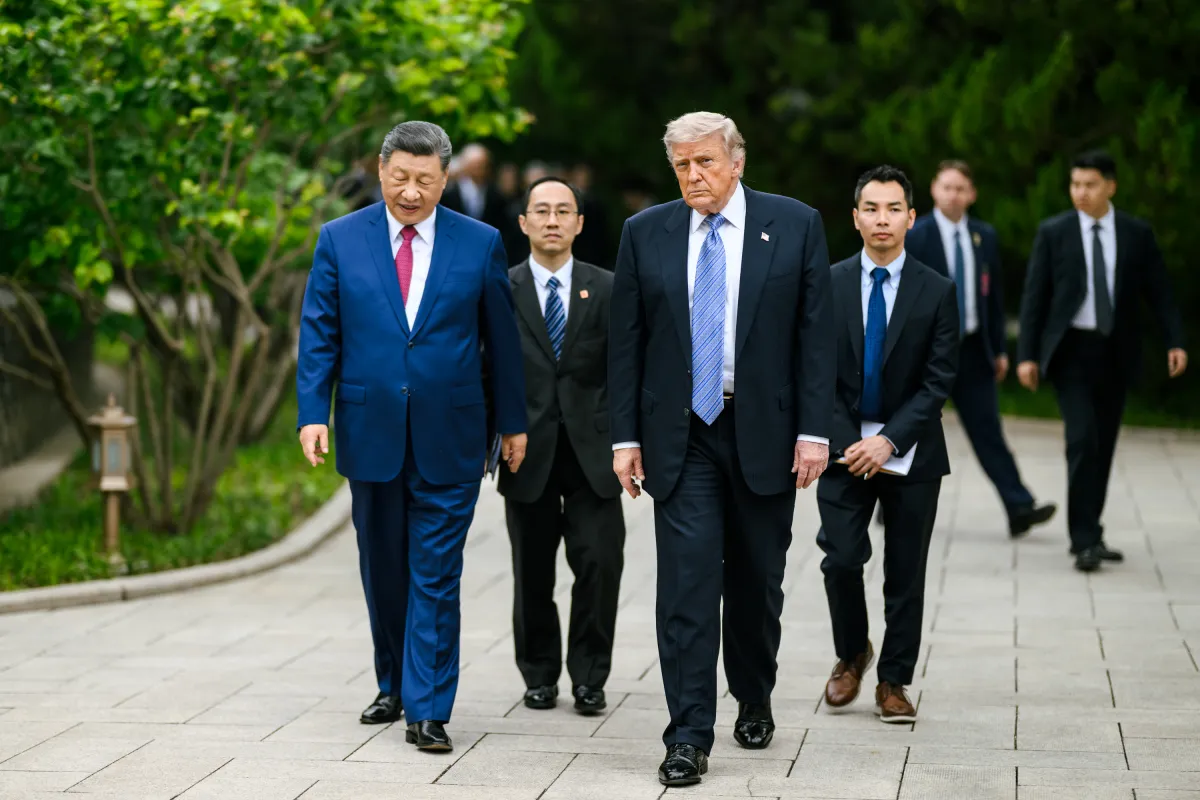
President Trump’s visit to China was significant less for specific deliverables than for what it revealed about the evolving framework of U.S.-China relations under Trump and Xi. Despite deep structural tensions, both leaders signaled that strategic competition can coexist with selective cooperation and active management of rivalry.

Trump’s China Visit Signals Emerging Convergence on Iran, But Major Gaps Remain
By the Basilinna Team
Trump’s two-day visit to Beijing produced a carefully staged diplomatic reset with China, but few concrete agreements. The broader summit covered Taiwan, trade, agriculture purchases, Boeing aircraft, technology and investment, but Iran is now one of the most consequential issues on the agenda.